Restorative Yoga for Chronic Fatigue and Burnout
Gentle restorative yoga to ease chronic fatigue and burnout. Relax deeply, restore energy, and support healing.
HEALTH TIPS
1/12/20267 min read
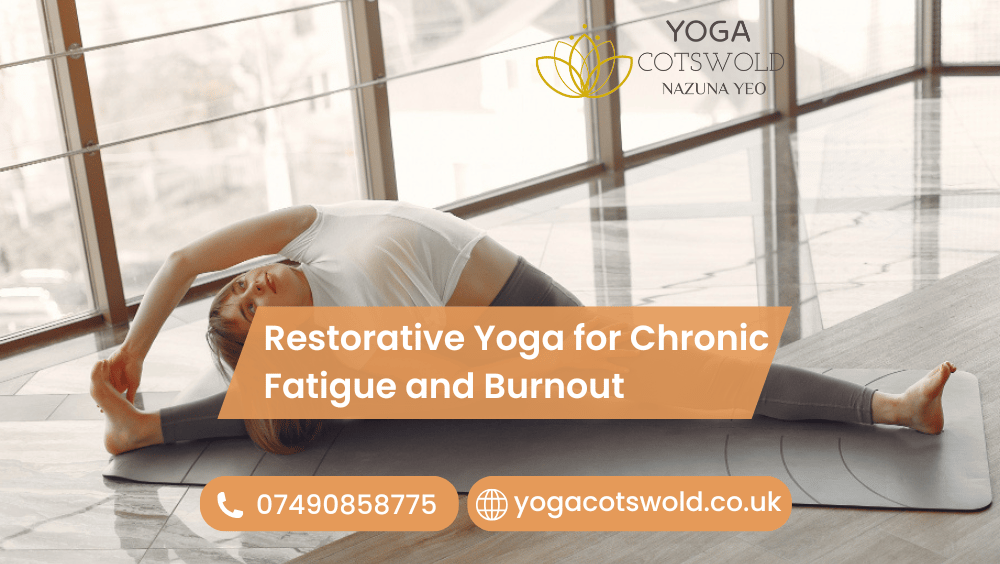
Some days, you wake up tired and you stay tired. Not “I had a late night” tired. More like your body’s battery won’t charge, even when you try. Or you’re functioning on the outside, but inside you feel flat, snappy, foggy or strangely hollow . If you’re one of them, I’m sorry that you have to go through this.
Chronic—fatigue & burnout can be properly draining in a way that’s hard to explain to people who haven’t felt it.
This is where restorative yoga can help—not because it’s a magic fix, and not because you need another task to “do”. It helps because it teaches your nervous system how to soften again. And when your system can soften, your sleep, mood, and day-to-day energy often follow (slowly, but genuinely).
I’m Nazuna Yeo, a yoga teacher with YOGA COTSWOLD, and this article is a simple, realistic guide to restorative yoga for chronic fatigue and burnout. No big promises. No pushing. Just practical steps you can use at home, plus a gentle sequence and FAQs.
What restorative yoga actually is (and why it works when you’re exhausted)
A lot of people hear “yoga” and imagine effort: stretches, sweaty classes, holding poses with shaking legs. Restorative yoga is the opposite.
In restorative, you use props—blankets, cushions, bolsters, blocks—so your body is supported. Then you stay in a shape for a while and let the muscles drop. The practice looks simple, yet it can feel surprisingly deep, because your system finally gets the message: you can stop now.
That matters with burnout and fatigue because your body may be stuck in a stress loop:
always “on”
always braced
always thinking three steps ahead
Even when you lie down, your mind might keep sprinting.
Restorative yoga gives you a structured kind of rest. Not scrolling rest. Not collapsing-and-worrying rest. Get details on Yoga Teacher in Leckhampton.
Burnout vs chronic fatigue: similar symptoms, different stories
People use these terms interchangeably & I get why. They feel similar in the body. Still, it helps to name them:
Burnout often builds over time from ongoing pressure—workload, emotional—stress, caregiving, life admin, constant deadlines. You might feel irritable, numb, tearful/detached. Sleep may be poor/it may be long but still not refreshing.
Chronic fatigue can have many causes—post-viral fatigue, nutritional—deficiencies, hormonal shifts, long-term stress, autoimmune conditions & more. Some people feel worse after activity, even small activity.
Either way, if you’re in that place, “power through” advice can be useless—or harmful. So this article leans into pacing, nervous system support, and gentle recovery habits.
Why your nervous system matters (without the science lecture)
When you’re stressed, your body behaves as if something urgent is happening. That’s useful short-term. Long-term, it can keep you wired and depleted.
You might notice:
shallow breathing
tight shoulders or jaw
digestion that’s a bit off
waking up tired
a buzzing mind at night
Or you swing the other way: you feel heavy and shut down.
Restorative yoga supports the “rest and digest” state. In plain English, it helps your body remember how to settle. And once you practise that regularly—even in small doses—you often feel more stable. Looking for a Yoga Teacher in Pittville?
The most important rule: do less than you think you should
If you’re working with chronic fatigue or burnout, the practice has to fit your energy on the day. Not your ideal plan. Not your “before I got tired” version of yourself.
A few ground rules I use with students:
Start tiny. Five minutes is absolutely fine.
Stop early. When you still feel “okay”, that’s a good moment to finish.
Stay warm. Being cold can keep your body alert.
Measure the after. The best practice leaves you feeling steadier afterwards, not wiped out.
If you’re prone to crashes, it’s better to do one supported pose consistently than to do a full routine once and then need two days to recover.
Setting up at home: you don’t need fancy props
If you have a bolster, great. If you don’t, you can still do this properly.
Simple prop swaps:
Bolster → firm cushion, rolled duvet, sofa cushion
Blocks → thick books
Strap → scarf or dressing gown belt
Eye pillow → folded tea towel
Then add a couple of comfort choices that sound small but actually help:
warm socks
a blanket over you
dim lighting
phone on silent (or in another room)
This isn’t about creating a “perfect” yoga vibe. It’s about reducing friction so your body can rest. Get details on Yoga Teacher in Prestbury.
A gentle restorative sequence (around 20–25 minutes)
If 25 minutes feels too long, choose one—pose & do that. Honestly—one pose can be enough.
1) Supported Child’s Pose (5–8 minutes)
Why it helps: It’s grounding and safe-feeling. Many people naturally exhale more here, which calms the system.
How to set up: Kneel with knees—wide, big toes closer together. Place a cushion/rolled duvet lengthways in front of you. Fold forward & rest your torso on it. Turn your head to one side, then switch—halfway if you want.
Make it easier: If your knees complain, add a folded blanket behind them—or skip this pose and go to the side-lying rest at the end.
2) Legs Up the Wall (8–12 minutes)
Why it helps: This is a classic for tired legs and busy minds. It also feels like your body is being “held”, without effort.
How to set up: Sit with one hip—close to the wall, then swing your legs up as you lie back. You can place a small folded—blanket under your hips, but keep it low—comfort first.
If it feels too intense: Bend your knees slightly/move a bit away from the wall so the legs aren’t perfectly—vertical. Looking for a Yoga Teacher in Stow-on-the-Wold?
3) Supported Reclined Bound Angle (5–8 minutes)
Why it helps: It gently opens the front body & encourages softer—breathing. It’s also a good pose for emotional—tension stored in the chest & belly.
How to set up: Lie back with a cushion supporting your upper—back & head. Bring the soles of your feet together & let the knees fall open. Support each knee with cushions/folded—blankets.
Add a grounding touch: One—hand on the chest, one on the belly. No forcing the breath—just noticing.
4) Side-Lying Rest (Side Savasana) (3–5 minutes)
Why it helps: Some people feel vulnerable lying flat on their back. Side-lying can feel safer and more restful.
How to set up: Lie on your side with a pillow under your head. Place a pillow between your knees. Embrace another cushion to your chest if it at all feels — comforting. Get details on Yoga Teacher in Northleach.
A simple breath practice that doesn’t take energy
Fancy breathwork can be too much when you’re fatigued. So keep it basic:
Longer Exhale Breathing (2–4 minutes)
breathe in gently for 3–4
breathe out slowly for 5–6
repeat, softly
If counting is annoying, forget the numbers. Just let the out-breath be a little—longer. It’s subtle, yet it can shift how you feel.
Common mistakes (and the kinder fix)
Mistake: Treating restorative yoga like another thing to “get right”.
Fix: Let it be imperfect. Adjust props. Move your head. Fidget. That’s your body settling.
Mistake: Doing too much on a “good” day.
Fix: Good days still need pacing. Stop before you’re tired, not after.
Mistake: Pushing into stretches because you feel stiff.
Fix: Choose support, warmth, and soft breathing first. Stiffness often eases once the nervous—system calms.
Mistake: Expecting it to work instantly.
Fix: Look for small changes: fewer—racing thoughts, slightly deeper sleep, less jaw tension, a calmer evening. Looking for a Yoga Teacher in Andoversford?
How Nazuna Yeo at YOGA COTSWOLD can support recovery
Burnout and fatigue can make decision-making feel heavy. Planning a routine can be too much. In a guided session, you don’t have to figure it all out alone.
At YOGA COTSWOLD, my approach is:
gentle restorative yoga suitable for low energy
nervous system settling without pushing
clear options for sensitive joints and changing capacity
a calm, non-judgemental—space
If you’re not sure where to start, a 1:1 can be helpful. We can build a practice that matches your real life, not a perfect schedule.
Related Articles:
» Yoga for Arthritis: Joint-Safe Movement You’ll Enjoy
» Yoga for Knee Pain: Strength Without Strain
» Yoga for Lower Back Pain: A 15-Minute Daily Sequence
» Yoga for Cyclists: Open Your Chest and Hips
» Yoga for Golfers: Improve Rotation and Balance
Reclaiming Energy: The Healing Power of Restorative Yoga
When you’re burnt out or chronically tired, you don’t need another thing to conquer. You need safe, steady rest. Restorative—yoga can be that—quiet, supportive & doable even on days when everything feels like a lot.
FAQs "Restorative Yoga for Chronic Fatigue & Burnout"
1) Can restorative yoga help with burnout?
Yes, it can support recovery by calming the nervous—system & improving rest quality, especially when practised consistently.
2) Is restorative yoga safe for chronic fatigue?
Often yes, because it’s low-effort and supported. If you have PEM or suspected ME/CFS, start very small and check with your GP.
3) How often should I practise?
Aim for 2–4 times per—week, but even once a week helps. Short practices count.
4) What if I fall asleep during a pose?
That’s not a problem. In fact, it can be a sign your body—needed it.
5) I don’t have props—can I still do it?
Absolutely. Pillows, blankets, books & a rolled—duvet work well.
6) Can restorative yoga improve sleep?
Many people find it helps them switch off, especially if they practise in the evening with gentle breathing.
7) How long should I hold poses?
Start with 3–5 minutes and build up if you feel better afterwards. Longer isn’t always better.
8) I feel emotional when I rest—why?
Rest can bring feelings to the surface. Go gently & come out of the pose if it feels—overwhelming.
9) Is restorative yoga better than meditation for burnout?
They can complement each other. Restorative yoga is often easier because the body is supported, so the mind doesn’t have to “try” as much.
10) What’s the best pose if I only do one?
Legs Up the Wall or Side-Lying Rest are great starters.
11) Can I do restorative yoga with long COVID?
Some people find it supportive, but start very small and monitor symptoms. If you flare up, reduce—time & intensity.
12) How do I know if it’s working?
Look for subtle wins: calmer evenings, less tension, slightly better sleep, or feeling a little more “in your body”.
Contact
info@yogacotswold.co.uk
Social Media
Get in Touch
07490858775






Address: GEORGE MOORE COMMUNITY CENTRE- BOURTON ON THE WATER
Moore Road, Bourton on the Water GL54 2AZ