Yoga for Knee Pain: Strength Without Strain
Yoga for knee pain improves strength without strain. Moreover, gentle stretches enhance flexibility.
HEALTH TIPS
12/5/20256 min read
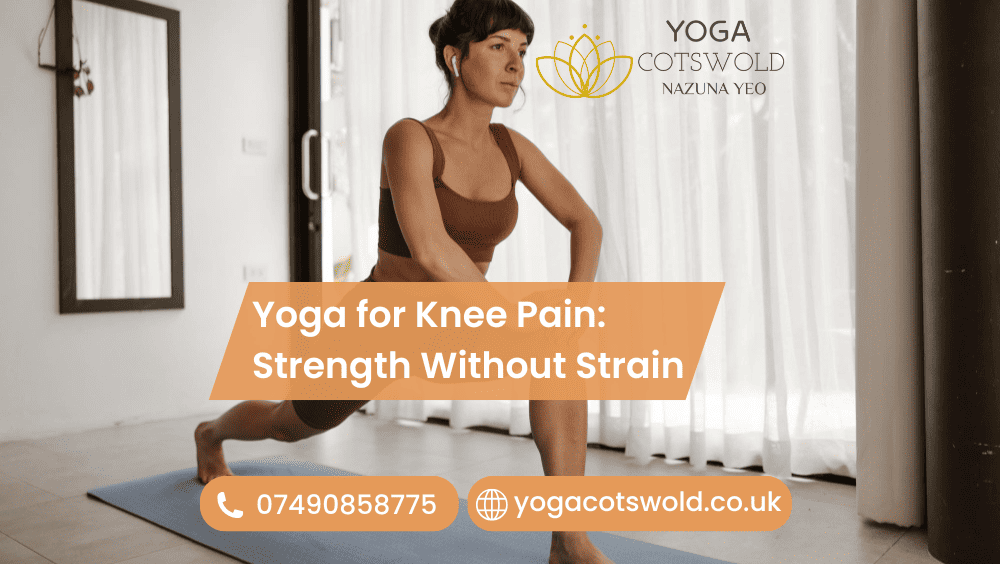
If your knees hurt when you climb a hill, crouch to tie a shoe, or step on the mat, you don’t need to give up movement. Yoga for knee pain can build strength without strain, restore confidence & calm inflammation. In this guide, I will show you how to practise safely & effectively using functional alignment, breath led pacing and thoughtful progressions so your knees feel supported rather than stressed.
Why Knees Complain and How Yoga Can Help
Knees often protest because the quadriceps, hamstrings, calves and glutes pull unevenly on the joint. Moreover, stiff hips & ankles can force the knee to twist or take loads it isn’t designed to bear. Fortunately, knee friendly yoga addresses the whole chain. We build hip and ankle mobility, we strengthen glutes and thighs and we refine foot placement. In consequent, the knee tracks better and pain reduces.
In class at YOGA COTSWOLD, we move with purpose. We strengthen what’s sleepy and release what’s tight. We also add breathwork to calm down the nervous system, because a calmer body processes discomfort differently and often heals faster. Get details on Yoga Teacher in Stow-on-the-Wold.
Principles: Strength Without Strain
1) Precision before depth
Rather than chasing the deepest lunge, we focus on alignment: second toe, centre of knee, and middle of thigh lining up. This cue alone can transform your practice.
2) Load gradually
We earn strength through steady layers—bodyweight first, then longer holds, then props or resistance. As a result, the joint adapts safely.
3) Mobility where it matters
Tight hips and ankles increase knee load. Therefore, we mobilise them first, which immediately lightens the work at the knee.
4) Pain is information, not a command
Sharp pain means “change something now”: reduce range, add support, or switch pose. Dull, manageable effort may mean you’re rebuilding capacity. We listen closely.
5) Props are power
A chair, blocks, a bolster, or a strap can make knee-safe yoga both accessible and effective. Use them proudly. Looking for a Yoga Teacher in Northleach?
Warm-Up: Switch On, Ease In
Start supine. Place a block under the sacrum and breathe into the belly for four slow counts, out for six. This longer exhale relaxes guard like tension around the knees.
Ankle circles and pumps : sixty sides each side to wake the calves & feet.
Hamstring floss: Strap around the foot, extend the leg to the ceiling, then bend & straighten gently. Keep the knee soft.
Glute bridge (short hold):Press through the heels, lift the hips for two breaths, lower with control. Repeat 6 to 8 times. This turns on the glutes so the knees don’t do all the work later.
Knee-Kind Strength: Key Poses and Cues
Supported Chair (Utkatasana) at the Wall
Stand with your back to a wall, feet hip-width.slide down little, keeping knees tracking over second toes. Press evenly through heels and balls of the feet. Hold for 20–30 seconds. Build to 45–60 seconds. This pose strengthens quads without compressing the knee joint.
Bridge Variations
Place a block between the thighs to recruit inner legs. Press the heels, lift, and keep ribs soft. The block teaches balanced action so the knees don’t cave in. Add a light resistance band around the shins if your knees tend to knock inward.
Gentle Warrior II with Short Stance
Shorten the stride so the front knee bends comfortably. Stack knee over ankle; avoid collapsing inward. Meanwhile, root the outer edge of the back foot to activate the hip rotators. Hold for 20 seconds each side. Progress slowly.
Half Chair to Tall Mountain (Mini Squats)
From Tadasana, hinge slightly, bend knees a touch, then stand tall. Keep weight mid-foot and heels. Increase depth only if the knees feel fine. This pattern mirrors daily life (sitting and standing) and builds functional strength.
Standing Quad Stretch with Strap
Balance near a wall, loop a strap around your foot & draw the heel towards the seat while lengthening the front of the thigh. Keep knees side by side. You’ll release tension that tugs on the kneecap. Get details on Yoga Teacher in Moreton-in-Marsh.
Smart Mobility: Hips and Ankles First
Lizard Lunge on Blocks: Support your hands so the spine stays long. Rock gently forward and back. This frees the front of the hip, reducing knee strain in standing poses.
Calf Wall Stretch: Straight and bent-knee versions. Better ankle mobility lets the knee track cleanly in lunges and stairs.
Figure-Four Reclined: Keep the pelvis heavy and the shin parallel. You’ll open the back of the hip without torquing the knee.
Sequencing That Loves Your Knees
I programme knee-safe vinyasa like this:
Breath and core setting (2–3 minutes)
Mobility (ankles/hips, 6–8 minutes)
Strength blocks (glutes/quads, 10–12 minutes)
Standing flow with shorter stances and props (8–10 minutes)
Restorative yoga finish (legs elevated, 5–8 minutes)
This arc warms tissues, builds capacity, then calms the system so recovery actually happens. Looking for a Yoga Teacher in Andoversford?
Modifications That Make All the Difference
Use a folded blanket under sensitive knees in tabletop.
Swap deep lunges for short-stance variations.
Try low lunge on blocks rather than hands on the floor.
Choose bridge over full squats on flare-up days.
Practice supported Tree Pose at the wall to build control before adding depth.
When to Seek Extra Help
Yoga supports many kinds of knee discomfort including mild osteoarthritis you should see a clinician if swelling persists, locking occurs or pain interrupts sleep. Bring your findings from practice: which movements help, which irritate. Then your physio can collaborate with your teacher for a joined up plan.
A Cotswolds Approach: Personal, Practical, Proven
At YOGA COTSWOLD, I (Nazuna) teach small groups and 1 to1 sessions, so I can meet you where you are. We blend mindful strength, joint wise mobility and calming breathwork.Furthermore, we progress sensibly, because longevity matters more than spectacle. If you want strength without strain & you want it to last, this method works. Get details on Yoga Teacher in Swindon Village.
Sample 15 Minute Home Flow
Seated breath (in 4 / out 6) 2 minutes
Ankle pumps & circles – 1 minute each side
Hamstring strap floss – 1 minute each side
Glute bridges – 2 sets of 6
Supported Chair at wall – 2 × 20–30 seconds
Short-stance Warrior II – 20 seconds each side
Standing quad stretch with strap – 30 seconds each side
Legs elevated on bolster Three minutes
Repeat three to four times per week. Progress by adding 5 to10 seconds to hold, not by forcing range.
Related Aticles:
» Beginner Yoga Classes in Cheltenham
» Best Yoga Teacher in Cheltenham
» Corporate Yoga Trainer for Companies in Cheltenham
» Group Yoga Classes in Cheltenham
Finding Relief and Strength Through Gentle Yoga
Knees thrive on clarity, not heroics. Hence, move with intention, add support early, and let strength accumulate. Before long, you will notice steadier steps, easier stairs and a practice that feels nourishing rather than nerve wracking.
If you live nearby join me, NAZUNA YEO at YOGA COTSWOLD for tailored yoga for knee pain sessions, so you can build strength without strain & enjoy your movement again.
FAQs: Yoga for Knee Pain
1) Is yoga safe if my knees ache daily?
Yes, if you choose knee-friendly yoga and scale the load. Start with shorter stances, wall support, and props. Increase time under tension gradually.
2) Which poses should I prioritise?
Begin with bridge, supported chair, short-stance warrior, and reclined figure-four. These build hip–knee balance without aggressive compression.
3) Are deep squats off-limits?
Not forever, but not first. Build glute strength and ankle mobility; then test depth in small steps, pain-free, with support.
4) How often should I practise?
Little and often works best. Aim for 15 to 25 minutes, three to five days per week. Consistency outweighs the occasional long sessions.
5) Do I need special equipment?
A strap, two blocks and a chair or wall are enough. Props make smart training possible.
6) Will yoga help osteoarthritis?
Yes. Gentle strength & mobility can reduce stiffness & improve function. However, consult your clinician for personalised guidance.
7) What about meniscus or patella issues?
Keep alignment precise, avoid twisting under load, and prioritise hip stability. Seek clearance from a physio after acute injury.
8) Can breathwork really reduce pain?
Often. A longer exhale turns down the nervous system alarm & relaxes guarding muscles around the knee.
9) How do I know if I am overdoing it?
Sharp or escalating pain during or after practice means you pushed too far. Next session, cut the depth, shorten holds or switch pose.
10) Is Yin or Restorative helpful?
Yes, as part of a mixed plan. Restorative yoga reduces tension & supports recovery, while strength work builds resilience.
11) Can runners and hikers benefit?
Absolutely. Balanced hips, mobile ankles, and strong quads protect the knee on hills and long miles.
12) How do I start with YOGA COTSWOLD?
Book a 1-to-1 assessment with NAZUNA YEO. We’ll review movement patterns, set goals, and design a knee-safe yoga plan that fits your life.
Contact
info@yogacotswold.co.uk
Social Media
Get in Touch
07490858775




Address: GEORGE MOORE COMMUNITY CENTRE- BOURTON ON THE WATER
Moore Road, Bourton on the Water GL54 2AZ