Yoga for Flexibility and Strength: A Complete Wellness Routine
Yoga for flexibility and strength builds a healthy body and calm mind. Practice daily stretching, balanced poses, and breathing to improve posture, energy, and overall wellness
HEALTH TIPS
4/9/20265 min read
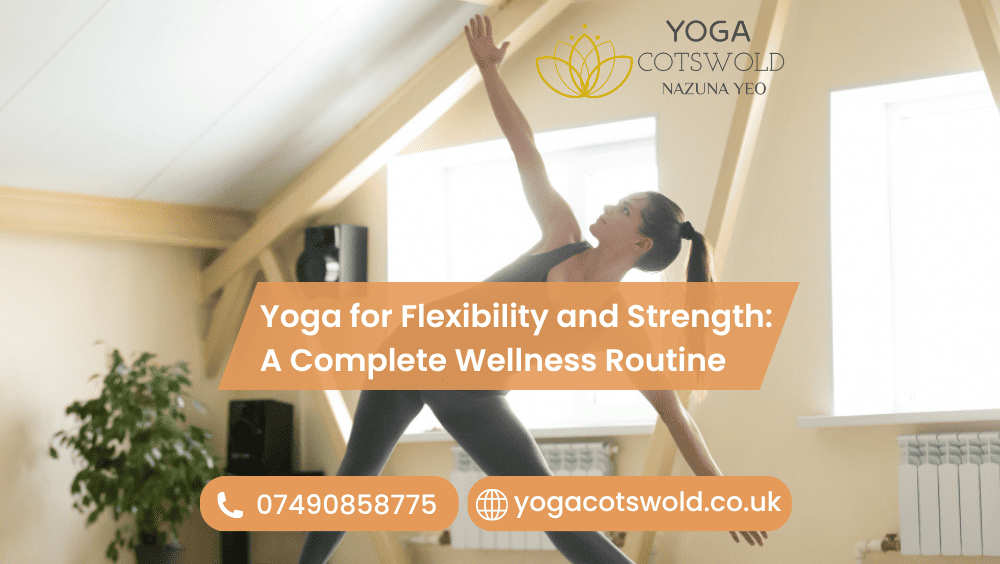
A body in balance isn’t a coincidence. It grows with consistent movement, breath awareness, and practice that seems realistic in everyday life. Yoga for flexibility and strength provide just that. It aids mobility, adds to posture, develops control and allows you to feel more comfortable in your own body. YOGA COTSWOLD teacher NAZUNA YEO encourages her students to practice in a way that is unhurried, intelligent and deeply supportive — rather than hurried or aggressive.
Most in the Cotswolds hope for a wellness regime that slots into banging out the nine to five, family life, walks and nature’s seasonal roll and tumbles. That’s why yoga is so successful here. It can be tender and yet ferociously forceful, rooted but exhilarating. When done in the right order, yoga can also increase the range of motion and build strong muscles that help stabilize joints. And that combination matters because flexibility, without strength, can feel brittle; strength, without flexibility, can feel constricted.
Why flexibility and strength matter together
And most people tend to overemphasize one and underplay the other. But the body works best when both qualities develop in tandem. Flexibility helps muscles stretch and joints move properly. Strength, in contrast, aids with alignment, balance and control.
When you combine both, you may notice benefits such as:
Better posture
Improved balance
Easier everyday movement
Less stiffness after sitting
More body awareness
Reduced risk of strain from poor movement habits
So a smart yoga wellness practice is never just about stretching. It should also contain plenty of poses that activate the core, legs, back, shoulders and hips. Get details on Yoga Teacher in Leckhampton.
What yoga does for the whole body
A well-designed yoga practice trains the body in a systemic way. Rather than targeting a single muscle, it trains chains of muscles to act as one. And this way you develop your strength that is USEFUL, and not just your exercise-strength.
For instance, standing poses can help to strengthen the thighs and glutes while opening the hips. Plank variations create stability through your shoulders and abdomen, while seated and reclined stretches increase your spine’s and hamstring’s mobility. Breath work, for instance, can help release the tension that stops you from stretching. Looking for a Yoga Teacher in Pittville?
The ideal yoga routine for flexibility and strength
A full routine should cycle through a clear order. This allows the body to warm up slowly, work focused and cool down gently.
1. Begin with breath and gentle mobility
Begins with breathing and gentle movement. Some movements prepare the body well, like cat-cow, shoulder rolls, seated side bends and hip circles. This stage may be important because it warms the tissues and draws attention inward
2. Build heat with dynamic movement
Then add some flowing movement like sun salutations. They serve to increase circulation, enhance coordination and awaken the larger muscle groups. And they link breath with action, an integral element of a mindful yoga practice.
3. Add standing strength poses
Standing postures build lower-body endurance and stability. Good options include:
Warrior I
Warrior II
Extended side angle
Chair pose
Triangle pose
These postures build strength through the legs, hips and core as well as create mobility along the hamstrings, groin and side body.
4. Use core and upper-body work
And to balance the power of these poses, always include plank pose, side plank pose, dolphin and boat pose. These stabilize the shoulders, abdominals and spine. Many times when strength improves so does posture.
5. Deepen with floor-based stretches
Once the body warms, deeper stretches are more comfortable and effective. Forward folds, low lunge and variations of pigeon pose, supine twists and hamstring stretches are beneficial to release tight spots.
6. Finish with rest
Rest is not optional. Savasana gives the body a chance to absorb all that work. It also teaches the nervous system how to relax, which is healing and beneficial. Get details on Yoga Teacher in Prestbury.
Best yoga poses for flexibility and strength
Some poses are especially useful when your goal is to become both stronger and more supple.
Downward-facing dog
This classic pose strengthens the shoulders and arms while stretching the calves, hamstrings, and spine.
Warrior II
A brilliant pose for leg strength, hip opening, and stamina. It also encourages mental focus.
Plank pose
Simple but powerful, plank builds core integrity and upper-body support.
Bridge pose
The bridge strengthens the glutes and back while opening the chest and front hips.
Triangle pose
This pose develops leg engagement while lengthening the hamstrings, waist, and side body.
Low lunge
A valuable posture for opening the hip flexors, which often feel tight after long hours of sitting. Looking for a Yoga Teacher in Stow-on-the-Wold?
Common mistakes to avoid
Many people want quick results. However, rushing often creates tension instead of progress.
Avoid these habits:
Forcing stretches too deeply
Holding the breath during effort
Ignoring alignment
Comparing your body with others
Skipping rest and recovery
Instead, move patiently. Strength and flexibility are developed more safely when the body perceives that it is supported, not pushed beyond its limits.
Why guided teaching makes a difference
Online videos are useful, but a good teacher will help you progress more wisely. At YOGA COTSWOLD, NAZUNA YEO provides a careful approach that emphasizes form, breath and individual pace. That means that students can gain confidence while learning how to move well.
A guided class can help you:
Refine alignment
Choose suitable pose variations
Improve breathing patterns
Build steady progress without strain
Feel encouraged rather than overwhelmed
That is especially helpful if you are new to yoga, returning after a break, or working with stiffness from modern daily life.
Related Articles:
» Yoga for Shift Workers: Sleep, Meal Timing, and Mini-Flows
» Yoga for Stress Relief: Simple Routines
» Essential Yoga Tips for Better Posture and Core Stability
» Yoga for Knee Pain: Strength Without Strain
» Yoga for Sciatica: What Helps and What to Avoid
A complete wellness routine starts with balance
Wellness, true wellness, isn’t about extremes. It is about being strong enough to sustain your daily life and flexible enough to bend at will. Yoga for flexibility and strength brings that balance beautifully. It fosters physical health, stabilizes the consciousness and promotes a closer relationship between breath and movement.
With regular practice, you might realize that things become easier. Walking feels lighter. Sitting tall becomes easier. It feels more natural to reach, bend and lift. There’s more to yoga than exercise over time. It is ingrained in how you take care of yourself.
At YOGA COTSWOLD, NAZUNA YEO guides students towards this fully integrated form of wellbeing in a practice that is both practical and nourishing. And honestly, that’s what a total wellness routine is all about.
FAQs: Yoga for Flexibility and Strength
1. Is yoga good for both flexibility and strength?
Yes, yoga can improve both. Numerous poses lengthen muscles as they also ask them to work and stabilise.
2. How long does it take to improve flexibility with yoga?
Many people see minor improvements within weeks. Nevertheless, regular effort over a few months tends to produce more enduring effects.
3. Can beginners do yoga for strength and flexibility?
Yes. Beginners, improve a few basic poses, then work from modified ones and go up.
4. Which type of yoga is best for flexibility and strength?
A solid, balanced flow class works great because you’re getting movement, stretching and balance plus muscular engagement.
5. How often should I practise yoga each week?
Most people should aim for between three and four visits to the gym a week, but even two regular sessions will have an effect.
6. Can yoga replace gym workouts?
It depends on your goals. Yoga develops functional strength and mobility, but some people opt to use it in addition to other kinds of workouts.
7. Does yoga help with stiff hips and hamstrings?
Sure, lots of yoga poses work the hips and hamstrings and lower back — all common tight spots.
8. Will yoga make me toned?
Yoga may help you look more toned, since it builds muscle and encourages better posture.
9. Is it normal to feel shaky in yoga poses?
Yes, especially in strength-building poses. Generally, the shaking indicates that the muscles are being challenged in an alternative way.
10. Should yoga feel painful?
No. You can feel some discomfort in exertion or stretching, but sharp pain is stopped.
11. What should I eat before a yoga class?
A light meal or snack, one to two hours before class usually works. Practicing after a heavy meal can feel uncomfortable.
12. Why learn with a teacher like NAZUNA YEO at YOGA COTSWOLD?
A well-informed teacher will guide you, safely progressing and modifying poses for your body to create a practice that feels effective and enjoyable.
Contact
info@yogacotswold.co.uk
Social Media
Get in Touch
07490858775






Address: GEORGE MOORE COMMUNITY CENTRE- BOURTON ON THE WATER
Moore Road, Bourton on the Water GL54 2AZ