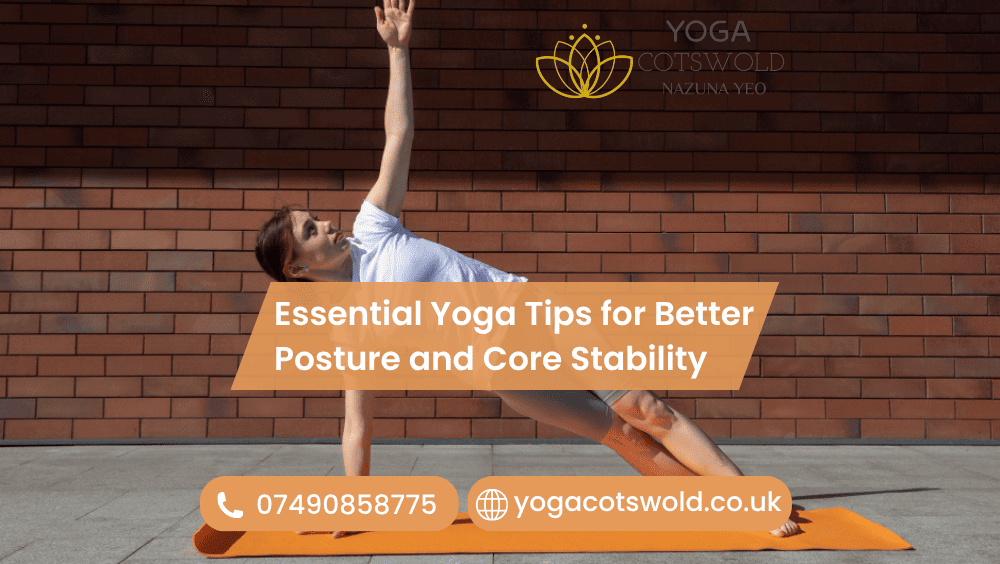
Essential Yoga Tips for Better Posture and Core Stability
Practice yoga daily to strengthen your core, improve posture, balance, and flexibility.
HEALTH TIPS
3/26/20266 min read
Posture is not just about standing tall. It changes the way you breathe, move, how your body feels at the end of a long day. Instead, perhaps many of us — in the Cotswolds and beyond — are passing hours at desks, behind wheels or scrolling through phone screens while hauling tension around with us in our shoulders. The form then slowly defaults to positions and habits that over time sabotage the body’s core while creating tension in the neck, chest, hips and lower back. Over time, that might add up to stiffness and discomfort — and bad balance.
That’s where yoga for stable posture and core might be a lifesaver. It does not ask the body to stay in a firm posture. The aim is not build bigger muscles, but it cultivates balance, strength and awareness. While you practice, the stature does not diminish, and the movement becomes more controlled and you feel the force underlining. At YOGA COTSWOLD, NAZUNA YEO frequently reminds students that improved posture comes not from sweeping overnight changes but through small daily habits. That is what makes a slow and deliberate approach so effective.
Why posture and core stability matter
When posture falls apart, the body has to work harder. Head drops forward, shoulders curl in, and the lower back at times takes on more of a load than it should. On top of this, a weak core makes it harder to properly support the spine. So, while so many people think that posture only has to do with the upper body, the reality is much more linked.
Your core contains the abdominals and deeper spinal muscles, pelvic floor, and surrounding hip area. Working in concert, they stabilize your trunk and keep you balanced as you walk, lean sideways, bend down to pick something up or simply stand still. So when the core is active and centered, posture happens automatically. Get details on Yoga Teacher in Swindon Village.
How yoga improves posture
The great thing about yoga for better posture is that when you focus one area many others benefit simultaneously. It conditions feeble muscles, opens tight areas and increases body awareness. It also encourages conscious breaths, which opens the chest and releases tension in the upper body.
Yoga also teaches alignment. In many postures, you find out where your shoulders rest, how your pelvis tilts and whether your ribs flare forward. These particulars may seem minor, but they are very important. When you start to notice them on the mat, you start to see them in real life as well. That is usually where real change starts.
The link between posture and the core
Having a strong core doesn’t mean you have hard abs or take endless crunches. Core stability is more functional strength in yoga. It helps control movement, protect the spine and maintain balance. The core, for example, supports you as you hinge from standing into a forward fold. The core prevents you from wobbling everywhere when balancing on one leg.
The body compensates when there is no core support. You grip the neck, you lock out the lower back or drive from the shoulders. But as you accrue strength gradually via yoga, things feel smoother and more grounded. So many yoga teachers, including NAZUNA YEO, emphasize posture and core work together — not as separate goals. Looking for a Yoga Teacher in Andoversford?
Essential yoga tips for better posture and core stability
1. Start with breath awareness
Think about the breath first before thinking about poses. As you sit or stand comfortably, take note of whether you’re only breathing into your chest, or letting your ribs and belly gently swell. You may be in a tension-filled, hunched position with short shallow breaths.
Do this: Inhale to lift the spine long, then exhale to very softly draw in through the lower belly. Do not grip. Only feel very mild support. Breathing this way will help recruit your deep core muscles.
2. Focus on spinal length, not stiffness
Good posture is often confused with being stiff. But rigid posture typically increases tension. Instead, think of length. See the top of your head lift and the softening of your shoulders down. Elevate the chest; do not clamp down.
This notion shows up over and over again in yoga. If you are in Mountain Pose or seated cross-legged, seek an easy lift through the spine. That kind length promotes better alignment.
3. Strengthen the back body
Poor posture often comes from weak muscles in the upper back and along the spine. Therefore, include poses that build strength behind you, not just in the front body.
Helpful poses include:
Bhujangasana (Cobra Pose)
Salabhasana (Locust Pose)
Bridge Pose
Tabletop with arm and leg extension
These poses help counter the rounded-shoulder position that many people develop through desk work and screen time.
4. Do not forget the deep core
For core stability yoga, slow and controlled movements work best. You do not need fast repetitions. In fact, steadiness often gives better results.
Useful poses include:
Boat Pose
Dead Bug variations
Plank Pose
Side Plank
Bird Dog from Tabletop
Move with the breath and keep the neck relaxed. If the jaw clenches or the shoulders creep up, ease back a little. Quality matters more than intensity.
5. Open the chest and shoulders
Tight chest muscles can pull the shoulders forwards. That is why posture correction yoga should always include opening stretches.
Try:
Puppy Pose
Thread the Needle
Supported Fish Pose
Cow Face Arms
Standing chest opener with hands behind the back
These poses can create more space across the collarbones and help the upper body feel lighter.
6. Build awareness in the pelvis
The pelvis has a huge effect on posture. If it tips too far forwards or backwards, the spine often compensates. So, learning neutral alignment can be very helpful.
Cat-Cow is excellent for this. As you move between arching and rounding the back, pay attention to how the pelvis shifts. Over time, you will find a more balanced middle point.
7. Practise balance poses
Balance poses strengthen the core, improve concentration, and train postural muscles in a natural way. They also reveal habits quickly, which is useful.
Try:
Tree Pose
Warrior III
Eagle Pose
Half Moon Pose
At first, wobbling is normal. Actually, the wobble is part of the learning.
8. Keep your practice consistent
If you do a little bit regularly, it tends to work better than one longer session once a week. Even if you do it for just ten or fifteen minutes — stay consistent, and any increment will help. For instance, a couple rounds of Cat-Cow, Cobra, Plank and Child’s Pose will promote better posture in the long haul. Get details on Yoga Teacher in Moreton-in-Marsh.
Daily habits that support better posture
Yoga helps a lot, yet daily habits matter too. If you slump over a laptop all day, one class a week may not fully undo that pattern. So, take posture into ordinary life as well.
Get up and move around more regularly, adjust the height of screens to an optimal ergonomic position, don’t lock your knees when you stand. Finally, when walking, let arms swing naturally and don’t puff up the chest but keep it relaxed. Little changes lead to big things, seriously they do.
Related Articles:
» Restorative Yoga for Chronic Fatigue and Burnout
» Starting Yoga Again After a Break: A Gentle 4-Week Plan
» How Often Should You Do Yoga to See Results?
» Morning Yoga for Beginners: 10-Minute Wake-Up Flow
» Yoga for Knee Pain: Strength Without Strain
Achieve Stronger Core and Perfect Posture with Yoga
Better posture and core stability are a reward over time. But yoga offers a gentle yet pragmatic path toward both. As you consciously breathe, build strength over time and practice regularly, your body begins to feel less tight and more balanced. At YOGA COTSWOLD, NAZUNA YEO recommends that students seek not perfection in posture but presence in action. Which in turn makes the practice sustainable, practical and infinitely more enjoyable.”
Yoga is a great place to know more about how to stand taller, how to walk more confidently and how you can support your spine in a natural way.
FAQs: Essential Yoga Tips for Better Posture and Core Stability
1. Can yoga really improve posture?
Yes, yoga can indeed assist with posture, by strengthening the muscles that support it; stretching areas where you are tight; and enhancing body awareness.
2. How often should I practise yoga for posture correction?
Because these can be done in three to five short sessions a week. Even 10–15 minutes on a regular basis will get you readable improvement.
3. Which yoga poses are best for posture?
Working Cobra Pose, Mountain Pose, Bridge Pose and Cat-Cow can all be quite beneficial for posture.
4. What is core stability in yoga?
Core stability in yoga is the intentional strength of the abdominals, spine and hips and pelvis in order to engage in movement with balance.
5. Is yoga better than gym exercises for posture?
Both yoga and gym are beneficial in achieving your goals. But yoga does integrate strength, mobility and awareness in one practice, which offers benefits to many.
6. Can beginners do yoga for core strength?
Sure, get started with beginner shapes like Tabletop, Bird Dog and more gentle Plank variations.
7. Does poor posture cause back pain?
Poor posture puts stress on muscles and joints because of the way we sit or stand, which can lead to back, neck and shoulder pain.
8. How long does it take to see improvement in posture with yoga?
Most experience subtle changes within weeks, especially with regular practice. Long-term habits, however, require time.
9. Can yoga help with rounded shoulders?
Yes, opening the chest, strengthening the upper back is yoga posturing and counter to bad rounded-shoulder posture.
10. Should I tighten my stomach all the time for better posture?
And no, being grippy all the time isn’t good. Instead, seek gentle core support with natural breath.
11. Is yoga safe for people with weak core muscles?
Yes, if they are done sensibly and modified appropriately. Starting slowly is important.
12. Who teaches posture-focused yoga at YOGA COTSWOLD?
At YOGA COTSWOLD, NAZUNA YEO leads students in yoga practices for posture, balance and core stability.
Contact
info@yogacotswold.co.uk
Social Media
Get in Touch
07490858775






Address: GEORGE MOORE COMMUNITY CENTRE- BOURTON ON THE WATER
Moore Road, Bourton on the Water GL54 2AZ