
Yoga for Seasonal Blues: Light, Breath, and Movement
Seasonal blues can feel heavy, but yoga offers gentle support. Try light yoga stretches, deep breathing, and slow movement to lift your mood naturally.
HEALTH TIPS
2/10/20265 min read
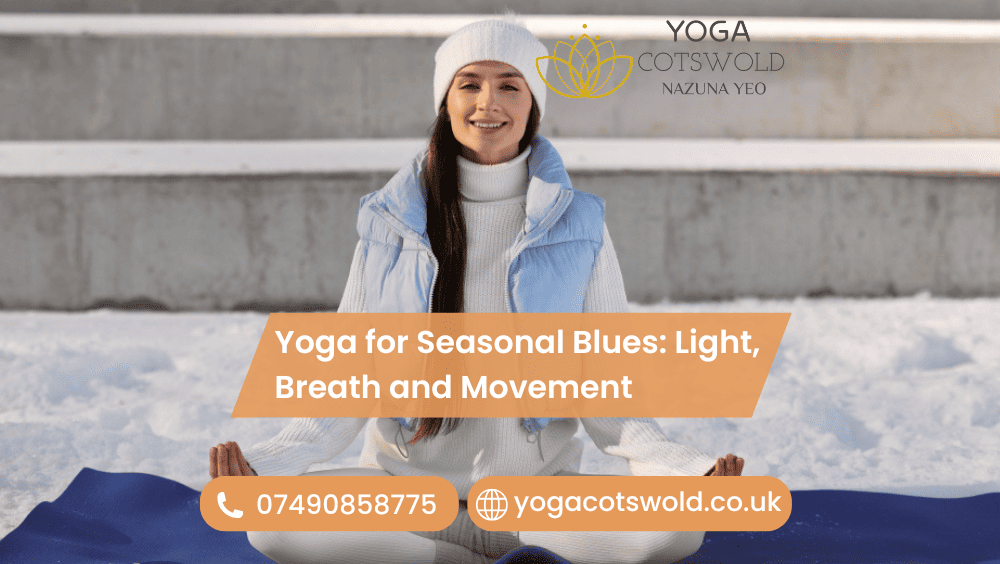
Some seasons feel like a fresh start. But winter can be like a dimmer switch that slowly fades down the light. The mornings are darker, the afternoons vanish quickly, and simple things — replying to messages, preparing dinner — can seem weirdly exhausting.
If you have been feeling a bit “meh” lately, you’re in good company. Many people feel the seasonal blues as days grow shorter and routines change. Nor is it always so dramatic-looking. Other times it’s just low motivation, heavy energy, feeling like you want to be inside or being more emotional than normal (for no clear reason).
Still, there are gentle ways to support yourself through it. And honestly, yoga can help a lot—especially when it’s approached in a simple, realistic way.
In this article for YOGA COTSWOLD with yoga teacher NAZUNA YEO, we’ll focus on three things that really matter in winter: light, breath, and movement. Nothing extreme. No “new year, new you” pressure. Just practical steps you can repeat.
Why winter can affect your mood
During shorter days, your body clock may become a little confused. You may be able to sleep in, but still wake up groggy. Also, you could be spending more time inside, moving less and feeling less connected to people. Then, without realizing it, your world gets smaller.
Meanwhile cold weather can cause constant tension in the body: Shoulders rise towards ears; jaw clenches shut; chest caves in just a bit. And when posture goes, so does breathing. Then the mood follows.
So yes, the seasonal blues can be emotional. Yet it’s also physical. That’s why yoga is helpful — it takes into account the development of the body and the nervous system together. Get details on Yoga Teacher in Swindon Village.
Light: the simplest mood support that most people skip
Light is a big deal. Not in a trendy way—just biology. Your brain uses daylight to set your internal rhythm. That rhythm affects sleep, energy, appetite, and even how emotionally “stable” you feel.
1) Get outdoor light early (even if the sky is grey)
A cloudy morning still gives you more light than your living room. So, if you can, step outside within an hour of waking for 5–15 minutes. You don’t need a long walk. You just need exposure.
Try:
standing near your front door with your tea
walking to the corner shop
taking the bin out slowly and breathing properly (yes, that counts)
2) Put your yoga mat where the light lands
If you practise at home, place your mat near a window. It sounds too simple, but it changes the whole feel. Even a dim winter day has a softness that indoor lighting doesn’t.
3) Use warm light in the evening
By evening, switch to warmer lamps if you can. It helps your body settle for sleep. Also, it makes evening yoga feel cosy instead of gloomy. Looking for a Yoga Teacher in Andoversford?
Breath: use pranayama to shift the day (without overthinking it)
Breathing is one of those things we ignore until we’re stressed. Yet in winter, breathwork can be your daily reset button.
Not every day needs energising breath. Some days need calming breath. So, it helps to have options.
A calming breath for busy minds: longer exhale breathing
Do this for 2–4 minutes:
inhale gently through the nose for 4
exhale slowly through the nose for 6
repeat, without forcing it
This tells the nervous system: “you can soften now”. And once you soften, you can move more easily.
A steadying breath for low energy: equal breathing
This is simple and surprisingly helpful:
inhale for 3
exhale for 3
keep your shoulders relaxed
let your face be soft (don’t underestimate this)
Do this for 1-2 minutes, then stand up and stretch. And that can often be enough to flip the day. Get details on Yoga Teacher in Prestbury.
Movement: yoga that lifts your mood, not drains you
When you feel low, your brain often says: “Don’t move.” But gentle movement helps circulation, posture, and energy. The key is choosing movement that feels doable.
The 5-minute “I can manage this” flow
This is for the days you can’t be bothered, but you want to feel better:
Cat–Cow (1 minute)
Downward Dog (5 slow breaths)
Ragdoll forward fold (5 breaths, bend knees)
Low lunge right (5 breaths)
Low lunge left (5 breaths)
Stand in Mountain Pose, hands on heart (3 breaths)
After this, you can stop. Or continue. Either way, you’ve done something kind. Looking for a Yoga Teacher in Stow-on-the-Wold?
Add gentle heart-openers (winter posture is real)
In winter, many people curl inwards—mentally and physically. So, chest-opening poses can feel like fresh air.
Try:
Cobra (low, not dramatic)
Bridge Pose
Supported Fish (upper back on a cushion, very comfy)
Heart-openers aren’t about pretending to be happy. They just help you breathe fuller. And then mood often follows.
Standing poses for strength and confidence
When you feel low, standing poses can give you a subtle “I’m here” feeling.
Good options:
Warrior II
Triangle
Chair Pose (short holds)
Tree Pose (wobble is normal!)
Balance poses are especially helpful because they bring your attention into the present. And when you’re present, the mind stops spiralling quite so much. Get details on Yoga Teacher in Northleach.
A simple winter rhythm: light + breath + movement
Here’s a routine that doesn’t require willpower like a superhero.
Most mornings (10 minutes)
5 minutes of daylight near a window or outside
2 minutes breathwork
3 minutes gentle flow
2–3 times a week (30–60 minutes)
a full class or longer home practice
Evenings (5–10 minutes)
restorative poses + slow breathing
The point isn’t perfection. The point is repetition. And if you miss a day, you just come back the next day. No drama.
Restorative yoga for the “emotionally tired” days
Some days, you don’t need more energy. You need nervous system comfort. Restorative yoga is perfect for that.
Try this short practice:
Legs Up the Wall (3–8 minutes)
Child’s Pose with support (1–3 minutes)
Reclined Twist (1–2 minutes each side)
Savasana with a blanket (3–10 minutes)
If thoughts come, that’s fine. If you feel restless, also fine. Just keep returning to the breath. Looking for a Yoga Teacher in Moreton-in-Marsh?
Tiny lifestyle supports that work with yoga (not against it)
Yoga is stronger when you support it with small basics:
walk outside even for 10 minutes
drink water (winter dehydration is sneaky)
eat at steady times (blood sugar swings feel like mood swings)
reduce scrolling first thing in the morning
keep a consistent wake-up time when possible
You don’t need all of these. Pick one. Then build slowly.
Related Articles:
» Morning Yoga for Beginners: 10-Minute Wake-Up Flow
» Yoga for Arthritis: Joint-Safe Movement You’ll Enjoy
» Yoga for Glutes and Hips: Build Strength Without Bulking
» Can Yoga Help Manage Chronic Pain?
» Yoga for Mental Health & Stress Relief: Reclaim Your Calm with Every Breath
A gentle reminder before we finish
Seasonal blues can make you feel like you’ve “fallen behind”. But you haven’t. Winter is a slower season. It’s allowed to be slower.
Yoga as your ballast: a little light, a little breathwork, a little movement. The little inputs add up over time.
And if your low mood is serious or hangs around for ages, or feels worrying, do please talk to a GP or mental health specialist. Support is powerful, not weak.
FAQs: Yoga for Seasonal Blues
1) What is the best type of yoga for seasonal blues?
Gentle hatha, soft vinyasa and restorative yoga are effective. Go with the kind of energy you have that day.
2) How often should I practise yoga in winter?
For best results, 3–5 times a week .but even a few minutes 10 times weekly helps.
3) Can yoga help Seasonal Affective Disorder (SAD)?
Regular yoga can promote better mood and sleep, but SAD might also require professional help — and in some cases light therapy.
4) Is morning yoga better than evening yoga for low mood?
Sometimes yes, because it creates the mood. That said, evening restorative yoga might help you sleep and feel calmer.
5) Which poses help most with low energy?
Practice all of the Sun Salutations, Warriors, Bridge, Cobra and gentle backbends.
6) What if I feel too tired to do anything?
Do 2 minutes of breathing and one pose (like Child’s pose). Then decide from there.
7) Does restorative yoga count as “real yoga”?
Yes. It’s good for your nervous system, and may be just what you need in winter.
8) Can breathwork help anxiety in winter?
Absolutely. Longer exhale breathing is a safe and easy place to start.
9) Should I practise near a window?
If possible, yes. Use natural light to support mood and your body clock.
10) How long should a winter yoga practice be?
Even 10–20 minutes is useful. Longer sessions are helpful, but not necessary.
Contact
info@yogacotswold.co.uk
Social Media
Get in Touch
07490858775








Address: GEORGE MOORE COMMUNITY CENTRE- BOURTON ON THE WATER
Moore Road, Bourton on the Water GL54 2AZ