
Yoga for Menopause: Cooling Poses and Sleep Support
Yoga for menopause helps women feel calmer. Cooling poses reduce hot flashes, improve relaxation, and enhance sleep quality.
HEALTH TIPS
11/25/20255 min read
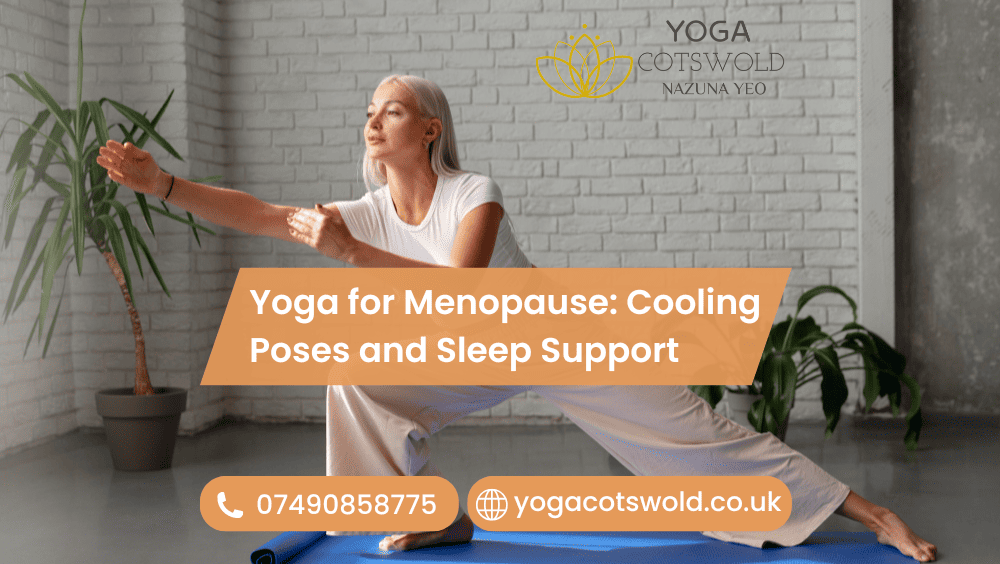
Menopause brings change—sometimes subtle, sometimes loud. One week feels steady and the next week mood shifts and choppy sleep. You are not broken; your body is adapting. With steady guidance and a few smart tools, you can ease symptoms, cool the system and rescue deep rest. In this guide, NAZUNA YEO from YOGA COTSWOLD offers a practical approach to yoga for menopause, focusing on cooling poses and genuine sleep support you can use tonight.
We’ll naturally highlight related concepts . yoga for menopause, cooling poses, sleep support, hot flushes, night sweats, restorative yoga, diaphragmatic breathing, nervous system regulation, vagus nerve, yin yoga, pelvic floor-friendly, gentle inversions, sleep hygiene, insomnia.
Why yoga helps during menopause (beyond “stretching”)
Menopause and perimenopause modulate hormones, which can slightly regulates , the mood, and the sleep cycle.. The nervous system controls the body. When stress increases, hot flushes often spike and sleeplessness. Therefore, we’ll train your body to downshift with breathwork and restorative yoga, while we mobilise the neck, chest, and hips to improve circulation. Because you’ll pair calm with light strength, you’ll feel grounded, not drained. Get details on Yoga Teacher in Northleach.
Your cooling toolkit at a glance
Breath: diaphragmatic breathing, cooling pranayama like Sitali/Sitkari and longer exhales.
Poses: heart-openers done smoothly hip releases, gentle inversions (like legs-up-the-wall), and yin yoga shapes held with support.
Timing: cooling work in the afternoon or evening, plus a short reset before bed.
Tone: pelvic floor-friendly choices that reduce strain and keep pressure easy.
Environment: dim lights, loose natural fabrics, cool water, and a quiet playlist.
Breath first: cool from the inside out
1) 3D diaphragmatic breathing (2 minutes)
Sit or lie down. Place hands around the lower ribs. Inhale through the nose & expand ribs 360 front, sides and back. Exhale longer than you inhale. Keep the jaw open. This pattern reduces heart rate, relaxes the vagus nerve and sets a cooler baseline.
2) Sitali / Sitkari (1–2 minutes)
Sitali: Curl the tongue like a straw and Inhale through the tongue/lips; close the mouth; exhale through the nose.
Sitkari: Inhale through the teeth; teeth lightly parted; exhale through the nose.
Move slowly; stop if you feel chilled or light-headed. This may be cooling poses for the breath soothing hot flushes and steady the mood. Looking for a Yoga Teacher in Moreton-in-Marsh?
The Cooling Evening Sequence (15–20 minutes)
You’ll need two sturdy books, a strap, and a wall. Keep the room dim light ; breathe softly through the nose.
A) Unwind the day (3–4 minutes)
Jaw release and Neck drifts and : Sit tall; gently tilt the head side to side; soften the jaw; exhale longer than you inhale.
Shoulder floss with strap: micro-bend at elbows; arms wide,move slowly to open the chest without heat.
B) Heart without heat (4–5 minutes)
Supported fish (gentle): Place one book under mid-back and one under head. Arms open, palms up. Breathe into the side ribs; let the front body broaden. Keep it subtle to avoid warming.
Cactus arms on the floor: elbows at 90°, shoulder blades easing towards pockets—no pinching, just space.
C) Hips and low back release (4–5 minutes)
Figure-four on the back: flex the foot; ankle over knee hug the shin gently.
Twisting eases the spine and massages the belly, which calms a busy mind. Supine twist with knees together: slow, supported eyes soft.
D) Gentle inversions for de-swelling and calm (4–5 minutes)
Hips a hand’s span from the skirting;Legs-up-the-wall: calves resting on the wall. If the hamstrings grip, bend the knees and place a cushion under the pelvis. Stay for 3 minutes.
Supported bridge (optional): Block under the sacrum at the lowest height for 6–8 breaths; come down slowly.
E) Close with breath (2–3 minutes)
6–10 rounds do the Sitali/Sitkari .
Diaphragmatic breathing—inhale 4 , exhale 6–8. Get details on Yoga Teacher in Andoversford.
A calmer night: sleep hygiene plus yoga
Great evenings start in the afternoon. Consequently, try these small shifts:
Avoid Caffeine : After midday, take herbal tea or water.
Light snack: Choose protein and carbohydrate meal if you wake hungry at 2am.
Screen dimming: One hour before bed, consider blue-light filters.
lower brightness;Warm-to-cool routine: Take a lukewarm shower to stimulate gentle cooling rebound as you dry off.
Ten-minute pre-sleep yoga: The sequence above, figure-four, supine twist, legs-up-the-wall, then breathwork.
Morning moves that don’t spike heat (8–10 minutes)
You want aliveness without sweat. Therefore, choose slow, open shapes:
Cat–cow with soft ribs, 6 rounds.
Low lunge with side bend, 5 breaths each side—aim for length, not heat.
Standing side stretch with strap, 3 breaths per side.
Wall puppy (hands on wall, hips back), 5 breaths—opens chest without strain.
Box breathing (inhale 4, hold 2, exhale 4, hold 2), 1–2 minutes.
You’ll step into the day clear and cool. Looking for a Yoga Teacher in Swindon Village?
Strength, but pelvic floor-friendly
You can stay strong and symptom-aware. Use exhale and avoid breath-holding.
Bridge inhale to prepare; exhale to rise; pause; exhale to lower.
Side-lying hip abductions (8–10 reps each): ribs stacked, pelvis quiet.
Dead bug (6–8 slow reps): slide the heel away as you exhale; keep jaw soft.
Wall push-up (6 reps): elbows narrow; move with breath.
Strength supports mood and bone health while keeping intra-abdominal pressure easy.
Weekly plan you can actually finish
Mon: Evening cooling sequence (20 min).
Tue: Morning moves (10 min) + bridge set (5 min).
Wed: Yin yoga focus—longer holds, extra props (15–20 min).
Thu: Restorative plus Sitali (15 min).
Fri: Morning moves (10 min).
Weekend: One gentle class at YOGA COTSWOLD or a combined home session (30 min).
Because consistency beats intensity, small daily doses work better than heroic once-a-week sessions. Get details on Yoga Teacher in Upper Slaughter.
Safety first: listen and adjust
If a pose heats you up, reduce the range or swap to a supported version.
If dizziness appears, pause the breathwork and lie on your side.
If sleep stays stubborn, and regular wake-up times.
If you experience pelvic heaviness or leaks, shift to pelvic floor-friendly options and consult a pelvic health physio.
Related Articles:
» Yoga for Lower Back Pain: A 15-Minute Daily Sequence
» Yoga for Cyclists: Open Your Chest and Hips
» Pelvic Floor-Friendly Yoga: Strength Without Strain
» Yoga for Chronic Pain and Inflammation
» Yoga in Managing PCOS and Hormonal Imbalance
Common mistakes to avoid
Power flows at 9pm. Strong heat late at night often backfires. Switch to restorative yoga instead.
Holding the breath. Over-effort spikes warmth; keep exhales longer.
Aggressive backbends. Choose supported fish over wheel; go for width across the chest, not height.
Skipping props. Cushions and blocks reduce strain and invite the body to release.
All-or-nothing thinking. Five cooled minutes beat none.
Final word from NAZUNA YEO
Menopause asks for new rhythms, not punishment. With cooling poses, kind breathwork, and simple sleep support, you can steady your days and soften your nights. Start with five minutes, add props, and practise when it feels kind. If you’d like tailored guidance, join me at YOGA COTSWOLD—we’ll refine your sequence, protect your energy, and help you feel cool, rested, and quietly strong through every season.
FAQs — Yoga for Menopause: Cooling Poses and Sleep Support
1) Will cooling breath really help hot flushes?
Often, yes. Sitali/Sitkari reduces perceived heat and softens the stress response. Pair it with diaphragmatic breathing and you’ll usually feel the edge come off within a minute or two.
2) I wake at 3am. What should I do first?
Keep the dim lights , sip cool water, then lie on your back for diaphragmatic breathing—inhale 4 minutes and exhale 8 for 2–3 minutes. If the mind races, add legs-up-the-wall for two minutes and return to bed.
3) Can I still lift weights or run during menopause?
Absolutely. Alternate higher-effort days with restorative yoga. Use exhale on effort, keep sessions earlier where possible, and finish evenings with the cooling sequence to support sleep hygiene.
4) I feel anxious and wired by night. Which two poses help most?
Start with supported fish (very gentle) to widen the chest, then supine twist to downshift the nervous system. Add 1–2 minutes of Sitali to cool and settle.
5) Are inversions safe?
Mild gentle inversions like legs-up-the-wall or a low supported bridge are usually fine and very calming. Avoid strong, heat-building inversions late at night; choose shorter, supported holds instead.
Contact
info@yogacotswold.co.uk
Social Media
Get in Touch
07490858775








Address: GEORGE MOORE COMMUNITY CENTRE- BOURTON ON THE WATER
Moore Road, Bourton on the Water GL54 2AZ