Yoga for Better Focus: Brain-Boosting Flow Sequences
Yoga for Better Focus improves concentration, memory, and mental clarity. Brain-boosting flow sequences enhance alertness, reduce stress, and sharpen attention.
HEALTH TIPS
3/11/20268 min read
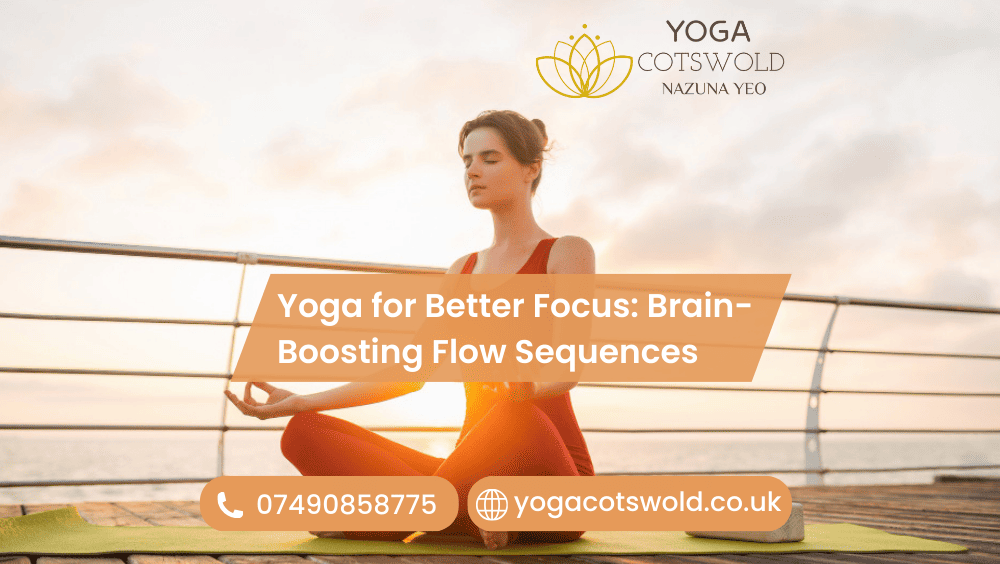
Some days, studying flows well. You sit down, make tea, open the book, and your mind stays with you. Other days, though, it is the complete opposite. You read one line three times, forget what you just revised, and feel strangely tired even when you have not done much yet. That fuzzier mental state is by no means unusual, particularly around exam time. Still, it can be frustrating.
That’s one reason many students and busy adults are now seeking yoga for focus. Not because yoga suddenly makes revision easy, and not because it takes the place of good study practices, but because it helps ground the body and calm down the chatter in your mind. NAZUNA YEO at YOGA COTSWOLD teaches yoga in a form that feels practical, grounded and truly supportive of modern life. And honestly, that kind of support goes a long way when deadlines stack up..
A mind in focus rarely happens just out of pressure.In fact, the harder people try to impose concentration on themselves, the more distracted they often get. The shoulders hunch, jaw tightens, breath is quick and suddenly the whole body feels anxious.
Why yoga helps with focus
That is one of the reasons yoga for concentration can be so effective before study sessions. You are not trying to “switch off” the brain. You are simply giving it better conditions to work in. A calmer nervous system. A longer breath. A body that is not stiff from sitting over notes or staring at a laptop for hours.
And there’s something else, too. So yoga tells you to be mindful, moment by moment. Where is your weight? What is your breath doing? In this pose, can you stay for five breaths without squirming? These are small things, certainly, but collectively they hone the skills of return. And that’s really what focus is: returning to the task, again and again, without making a big drama out of it. Get details on Yoga Teacher in Swindon Village.
Why students lose focus so quickly
Books and notebooks are not the only important aspect of modern studying. There are screens, messages, tabs open, alerts, stress, deadlines and a whole lot of mental clutter. Even students with the best intentions can feel overwhelmed. Sometimes it’s not the brain that is lazy. She’s just fatigued and overstimulated.
That is why brain-boosting yoga flows work best when they are simple. During busy study periods, you do not need a complicated class with twenty pose changes to remember. You need a brief practice that allows you to breathe more deeply, sit more comfortably in your space and ease yourself into work with less resistance.
At YOGA COTSWOLD, where she now works, NAZUNA YEO sometimes calls for a gentler approach: less force and more awareness. It feels almost too simple, but simple works often. Looking for a Yoga Teacher in Andoversford?
Benefits of yoga before study and exams
A short yoga practice before revision can support the body and mind in several useful ways.
1. It reduces physical tension
And working long hours at a desk can tighten the neck, shoulders, upper back and hips. When the body feels like it’s trapped, so does the mind. Stretching and breathing opens up that heavy weight.
2. It steadies the breath
Those who have test anxiety often don’t realize that they breathe high in the chest. The breath is lowered and slowed through yoga, slowing down the mind from speedy to scrambled.
3. It improves mental clarity
You still may have to put in the effort, of course, but yoga can help clear you up before you get started. It matters, particularly as you are going over challenging material.
4. It supports emotional balance
Study stress, however, is not always about the subject. At times it is the fear of losing bits of memory, being left behind, or lack of doing good enough. Yoga can help cushion that emotional pressure and provide some stability.
5. It creates a useful routine
A short flow before revision becomes a signal. It tells the brain, “Now we begin.” That ritual can make starting easier, which is often half the battle. Get details on Yoga Teacher in Moreton-in-Marsh.
A gentle yoga flow for focus
Here’s a simple sequence that can enhance performance preceding a study session, homework/reading or before an exam. You don’t need much space, and you don’t even have to be fancy. You don’t need much more than 15 to 20 minutes.
Easy Seated Breathing
Cross-legged on the ground or seated in a chair with your feet planted firmly into the earth. Lace your fingers on your thighs. If you want, you can close your eyes.
Breathe in through the nose for four counts. Exhale to a count of six. Continue for a minute or two.
So this is a good starting point, because it slows the pace. The exhale lengthens. The chest softens. The thoughts don’t go quite so fast.
Cat-Cow Stretch
Come onto hands and knees. Inhale, lifting your chest and tailbone slightly. On an exhalation, round your spine, lowering your head.
Do this extremely slowly for a minute.
Cat-Cow is particularly pleasant to do after you’ve been sitting for a while. It’s spine-stirring but not overembellished. It also engages you to move with the breath, focusing your awareness into the body.
Downward-Facing Dog
From hands and knees, raise the hips up and back. If you feel tightness in your hamstrings, keep the knees bent. Let the spine lengthen.
Stay for five slow breaths.
This pose can feel energizing and grounding. It wakes up the entire body, opens the shoulders and helps shake off sluggish energy. It produces a sensation of alertness without agitation for many people.
Low Lunge
Step one foot forward to the inside of your hands, and lower the back knee down to the earth. Lift the chest and breathe slowly. Hold for five breaths and switch sides.
Low Lunge opens the hips and front body, which can get tight from a lot of seated work. And it can help the breath be fuller. Sometimes just opening the front of the body slightly makes a study session feel more manageable.
Warrior II
Stand and step the feet wide. Pivot one foot outward, bend the knee at the front leg and gray your arms wide. Gaze over the front hand. Take five breaths and then switch sides.
Warrior II is one of those poses that asks for presence. You need to stay with it. The legs work. The arms reach. The gaze stays steady. That makes it excellent for improving focus with yoga.
Tree Pose
Stand tall, and take one foot to the inner ankle or calf of the opposite leg. Then, bring the hands together at the chest. Gaze at one solid object and breathe slowly five times. Then change sides.
Balancing poses are brilliant for concentration. The moment the mind drifts too much, the wobble comes. So the pose teaches you, very kindly, to come back.
Seated Forward Fold
Sit with both legs extended in front of you. Hinge forward gently and rest your hands where they land.
Stay for eight slow breaths.
This pose has a quieter quality. It turns your attention inward and helps calm the system. If your thoughts feel noisy, a gentle forward fold can be a relief.
Supine Twist
Lie on your back, hug one knee in, then guide it across the body into a twist. Stretch the opposite arm out. Breathe for five breaths, then change sides.
Twists can feel very releasing after a busy day. They help soften the back and ribcage, and they often bring a sense of reset.
Legs Up the Wall
Sit beside a wall, then swing your legs up as you lower your back down. Let your arms rest by your sides.
Stay for three to five minutes.
This is a lovely pose for mental tiredness, screen fatigue, and exam stress. It does not demand much, which is perhaps why it works so well. You simply rest, breathe, and allow the nervous system to settle.
Final Rest
Lie flat for two minutes and let your body become heavy. Do nothing. There is no need to improve at the moment.
Then roll to one side, sit up slowly, and begin your study session.
That pause at the end matters. It helps the effects of the practice sink in. Looking for a Yoga Teacher in Northleach?
Best time to practise yoga for focus
There’s no one best time. It will differ according to your rhythm, energy and study schedule.
Morning If you don’t feel clear at the beginning of the day, morning might work well. A short flow can help get you awake and start with more clarity.
Before revision is often ideal. Even just ten minutes makes it easier to get into writing, reading or memorising.
It can work like magic during breaks from studying. Instead of scrolling through your phone and coming back feeling even more scattered than you were before, taking a few stretches or breathing with intention has the power to reset your focus.
The night before an exam The evening before an exam is a good option as well, especially if you’re feeling anxious. If so, choose an easier sequence with longer exhales and more restorative poses. Get details on Yoga Teacher in Stow-on-the-Wold.
Breathwork for mental clarity
Breathwork does not need to be complicated to be useful. In fact, during stressful times, simple is usually best.
Try this:
Inhale through the nose for 4
Exhale through the nose for 6
Repeat for 10 rounds
That longer exhale can help the body feel safer and less rushed. Then the mind often follows. It is a small practice, but surprisingly effective.
Many students find that yoga and breathwork for exams gives them something steady to return to. Not a big performance. Just a quiet method that helps them gather themselves before they begin. Looking for a Yoga Teacher in Prestbury?
Keeping the practice realistic
One thing worth saying: yoga does not need to become another item on a pressure-filled to-do list. It is meant to support you, not become one more thing to “get right”.
Keep it simple. Keep it regular. Ten minutes is fine. Twelve minutes is fine too. A few good breaths and a handful of steady poses can be enough to shift the tone of your day.
Working with a thoughtful teacher also helps. At YOGA COTSWOLD, NAZUNA YEO offers a calm and considered approach that feels especially suited to students, busy professionals, and anyone whose mind feels overfull. Her style does not push for extremes. Instead, it encourages awareness, steadiness, and balance — which, really, are exactly what most people need during study periods.
Related Articles:
» Yoga for Sciatica: What Helps and What to Avoid
» 30-Day Yoga Tone-Up Challenge
» Yoga for Golfers: Improve Rotation and Balance
» Yoga for Scoliosis: Gentle Poses to Even Out Tension
» Yoga for Knee Pain: Strength Without Strain
low, Focus, Flourish: Yoga for a Sharper Mind
Studying well is not only about effort. It is also about condition. A tired, tense, overstimulated mind will struggle, even with the best intentions. That is why yoga for focus can be so valuable. It creates better conditions for concentration. It helps the breath settle, the body soften, and the mind come back to the present.
You may still have long revision days. You may still feel pressure now and then. That is normal. But with regular practice, even short practice, things can begin to feel less chaotic. A bit clearer. A bit calmer. A bit more possible.
And sometimes, during exam season, that small shift is exactly what helps most.
FAQs: Yoga for Focus, Study and Exams
1. Can yoga help improve concentration for studying?
Yes. Yoga improves focus by soothings the nervous system, relieving tension and creating focus from breath and movement.
2. What is the best yoga for focus?
Gentle flow yoga as well, balancing poses and seated breathing and grounding postures help often with focus and mental clarity.
3. Should I do yoga before or after studying?
Either can be useful, though many find yoga in particular prior to studying to work quite well since it prepares the mind for concentration.
4. How long should I practise yoga before revision?
Even 10 to 15 minutes can relieve a sense of frantic, set your resolve and allow you to begin.
5. Is yoga good before exams?
Yes, yoga before an exam can help calm stress and slow the breath and relieve that fidgety, panicky feeling.
6. Which yoga poses are best for brain focus?
Aside from Legs Up the Wall, Tree Pose, Warrior II, Downward Dog and Low Lunge; seated forward folds will also serve you well.
7. Can yoga reduce exam anxiety?
It can help. Yoga can enhance a more peaceful body and move in a steadier breath, thus lessening sensations of anxiety.
8. Is breathwork useful for studying?
Yes. Basic breathwork improves mental clarity,making it easier to settle into a study session.
9. Can beginners do yoga for focus?
Absolutely. Beginners can even do short and simple practices and feel real benefits.
10. How often should I do yoga during exam season?
Three to five shorter sessions per week can be beneficial, although even a few minutes each day can help.
Contact
info@yogacotswold.co.uk
Social Media
Get in Touch
07490858775








Address: GEORGE MOORE COMMUNITY CENTRE- BOURTON ON THE WATER
Moore Road, Bourton on the Water GL54 2AZ