At-Home Yoga Setup: Mat, Props, and Space on Any Budget
Simple at-home yoga setup with a comfortable mat, basic props like blocks or straps, and a quiet space.
HEALTH TIPS
3/6/20266 min read
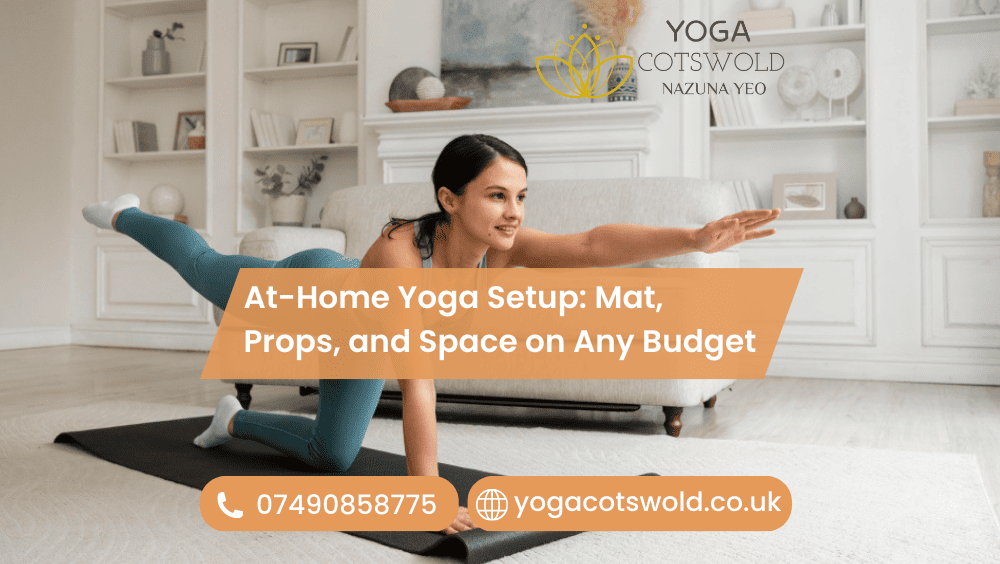
That you need impeccable spare-room styling and a full set of studio props to practice yoga at home is a myth. In real life, most people begin in a corner of a bedroom, next to a couch or any piece of floor that’s available that day. And honestly? That’s more than enough.
At YOGA COTSWOLD, NAZUNA YEO frequently reminds students that the “perfect setup” is one that helps you show up. So rather than chasing an Instagram-friendly setup, let’s create a home yoga space that feels functional, cozy and repeatable — whether you’re on a tight budget or planning to splurge.
1) Pick your spot first (and keep it simple)
Before you buy a thing, choose where you’ll practise. It doesn’t need to be big. It just needs to be workable.
Try two quick tests:
Arm sweep: stand where you’d place your mat and stretch your arms out wide. If you’re knocking a lamp or grazing a bookshelf, shift things slightly.
Lunge check: take one foot back into a long lunge. If you hit a slick edge with your back toes (like the corner of a rug), you’ll want something more stable underneath.
If you can manage those two activities without getting elbowsy, you have a usable area
Now tweak it to sound a bit more welcoming—without making it a “project”:
Light: a warm lamp pulls softer than above-lighting, especially during the evening.
Warmth: have a jumper or blanket close by — you chill quickly when you stop moving.
Sound: a quiet playlist, a timer, or plain silence—whatever helps you settle.
Boundaries: when you live with other people, your mat can be a signal that says “I’m practising now” more clearly than any words.
Choose a destination you can splurge in again, above all. As it turns out, practice has little to do with how many square feet you have. Get details on Yoga Teacher in Swindon Village.
2) Choosing the right yoga mat (what actually matters)
A yoga mat is the one item that genuinely affects how your practice feels. It changes your grip, your comfort, and your confidence—especially if you’re practising regularly.
Thickness: the quick guide
4–6 mm: the all-rounder (stable, comfortable, good for most people)
6 mm and up: softer on knees and wrists, but sometimes less stable for balance
Thin travel mats: handy for portability, but you may want extra cushioning
Grip: don’t ignore this
If your hands slide in Downward Dog, practice becomes annoying fast. So, if you sweat easily or practise dynamic flows, choose a mat known for good grip.
Budget vs long-term value
A budget mat is fine when you’re starting out. However, if you practise often, it can wear down quickly—then you end up replacing it anyway. In that case, a mid-range mat can be better value overall.
Nazuna Yeo’s approach: choose a mat that makes it easy to begin. If it feels stable under your hands, you’ll come back to it. Looking for a Yoga Teacher in Andoversford?
3) The most useful yoga props (and easy substitutes)
Props aren’t just for beginners. They’re tools—full stop. They help you find steadier alignment, soften unnecessary strain, and practise with more awareness.
Yoga blocks
Yoga blocks bring the floor up to meet you. They’re brilliant for balance work, hamstring tightness, and shoulder support.
Use them for: Triangle, Half Moon, seated folds, supported bridge
Budget substitutes: thick books (sturdy ones), a firm box, or a solid stack of magazines taped neatly
Yoga strap
A yoga strap helps you explore range without yanking or forcing.
Use it for: hamstring stretches, shoulder opening, seated poses
Budget substitutes: dressing gown belt, scarf, or a strong tote-bag strap
Yoga bolster
A yoga bolster is comfort and support in one. It’s especially helpful for Restorative yoga, slow evenings, and stressy weeks.
Use it for: supported child’s pose, reclined heart opener, hip-supported rest
Budget substitutes: rolled duvet, stacked pillows, or a tightly rolled blanket
Blanket (surprisingly essential)
A blanket does it all: it cushions your knees, supports your hips, keeps you warm in savasana and brings lift to seated poses.
If you have one blanket, then you already have a yoga prop.
Optional extras
Yoga towel: helpful if you sweat a lot
Meditation cushion: makes seated work more comfortable
Small speaker or timer: supports routine, not mandatory
4) Home yoga setup by budget (realistic and doable)
£0–£30: “Start where you are”
basic yoga mat (or a non-slip rug for gentle practice)
two thick books as “blocks”
dressing gown belt as a “strap”
a blanket for warmth and cushioning
This is enough for a solid home routine. No drama, no overthinking.
£30–£80: “Comfort + consistency”
grippier mid-range yoga mat
2 proper yoga blocks
1 yoga strap
blanket + firm cushion (as a bolster substitute)
This level usually feels noticeably better, especially for wrists, knees, and stability.
£80+: “Home studio feel”
premium yoga mat
blocks + strap + yoga bolster
optional towel + meditation cushion
If yoga is your daily anchor, this setup makes home practice genuinely lovely. Get details on Yoga Teacher in Moreton-in-Marsh.
5) Small space yoga (yes, it works)
If you live in a flat, share a house, or don’t have a spare room—welcome to real life. Luckily, yoga fits into it.
Try these practical fixes:
Go lengthways: set your mat along the longest open line of the room
Use the wall: it’s perfect for balance, stability, and alignment feedback
Store vertically: behind a door, next to a wardrobe, or beside the sofa
Keep a “yoga kit”: strap + blocks + towel in a tote bag = quick setup
Choose foldable props: blankets and straps store easily
And if the floor isn’t ideal some days, that’s fine too. A chair-based session still counts.
6) Quick comfort fixes (when something feels “off”)
A good at-home yoga setup should help your body feel supported. If it doesn’t, adjust rather than pushing through.
Wrist ache: blocks under the hands, broaden hand placement, lessen time in weight-bearing poses
Knee sensitivity:Fold a blanket under your knees in lunges and tabletop.
Mat slipping: place a non-slip underlay or slightly damp towel underneath
Lower back tension in rest: place a pillow or bolster under knees.
Slippery hands: towel for grip and even fingers
Small changes can transform the whole session. Looking for a Yoga Teacher in Northleach?
7) Make it habit-friendly (because that’s the real goal)
The best home practice is the one you actually do. So, reduce the “set-up hurdle”.
keep your mat visible
decide on a realistic minimum (even 8–10 minutes)
start with one easy ritual: one deep breath, then one stretch
finish with something pleasant—short savasana, tea, or a moment of quiet
Some days will feel amazing. Other days will feel ordinary. Both still count.
Related Articles:
» Yoga for Chronic Pain and Inflammation
» 30-Day Yoga Tone-Up Challenge
» Yoga for Carpal Tunnel & Tight Forearms
» Starting Yoga Again After a Break: A Gentle 4-Week Plan
» Core-Building Yoga: Plank Variations and Boat Pose Progressions
A gentle word from NAZUNA YEO (YOGA COTSWOLD)
Your home practice doesn't have to look a particular way in order to be meaningful. Start with what you currently have and then upgrade only when it genuinely serves you. And on that, your little corner becomes a reliable place; somewhere your body knows as “home”.
FAQs on "At-Home Yoga Setup"
1) What thick yoga mat is best for home practice?
4–6 mm is fine for most people. For added cushioning, if sensitive knees, add a folded blanket.
2) Do beginners really need yoga blocks?
They help a lot. Yoga blocks make poses more accessible and often improve alignment straight away.
3) Can I practise on carpet instead of a mat?
Yes for gentle styles. However, carpet can feel unstable for balance work, and it may not suit dynamic flows.
4) What’s a good substitute for a yoga strap?
A dressing gown belt or scarf will do the job. Just be sure it’s a hardy one that won’t slip.
5) Is a yoga bolster worth buying?
If you like slower, restorative practices, yes. If not, just roll the duvet and see how you feel.
6) How much space do I need for yoga at home?
About the size of your mat, plus enough space to stretch your arms and step into a lunge.
7) How should I clean a yoga mat?
Swab it with mild soap and water, then allow it to air dry completely before rolling it up.
8) What flooring is best for home yoga?
Firm carpet, wood or laminate can all be feasible. Drop a blanket where you want more padding.
9) My hands slip in Downward Dog—what helps?
Try a mat with more grip, use a small towel and press evenly between your fingers and knuckles.
10) Do I need lots of yoga props to get flexible?
No. A blanket, a strap substitute, and two “blocks” can support flexibility safely and effectively.
11) What’s a sensible budget for a good home yoga setup?
£30–£80 often covers a solid mat plus key props. However, you can start with almost nothing and still practise well.
12) How do I stay consistent at home?
Make it simple to start, simplify your setup and stick to a very small minimum practice you know you can do even on busy days.
Contact
info@yogacotswold.co.uk
Social Media
Get in Touch
07490858775






Address: GEORGE MOORE COMMUNITY CENTRE- BOURTON ON THE WATER
Moore Road, Bourton on the Water GL54 2AZ