Gentle Yoga for Larger Bodies: Props, Modifications & Wins
Gentle yoga for larger bodies uses props; therefore comfort grows, and confidence rises; moreover, also smart modifications create wins.
HEALTH TIPS
12/19/20256 min read
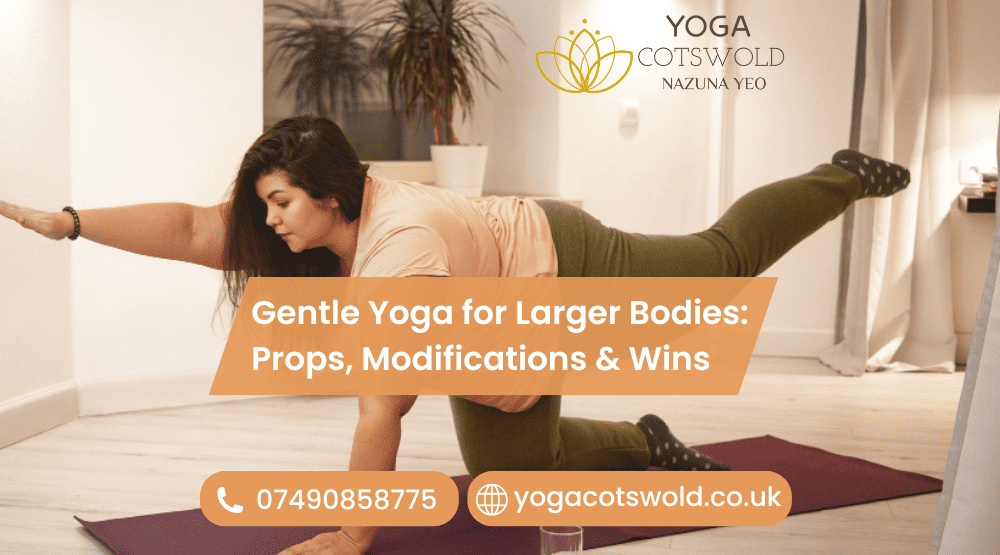
Gentle yoga is supposed to be a soft landing. And yet, for those in a larger body, walking into a yoga space can elicit a different set of questions. Will the shapes work for me? Will I be the only one modifying? Will I feel awkward?
Here’s the reality: yoga is not one-size-fits-all. Bodies differ, and yoga needs to be able to meet us where we are. And so, in this essay I’m going to keep it useful and nice. We will discuss how to tell when it is time for a break (or perhaps some popcorn), what the sorts of alterations that would feel better are and how to identify those little wins between poses that actually render practice worthwhile.
Because yes—gentle yoga can be strong, empowering, and deeply calming, all at once.
Why gentle yoga works so well for larger bodies
Gentle yoga emphasizes comfort, the breath and steady movement rather than our edging into extreme forms. And in turn, it allows you to learn what your body does like. It even helps out your joints, alleviates stress and increases day-to-day mobility in a manner that feels authentic.
At the same time, larger bodies often have different geometry. For example, thighs may meet sooner in folds, or the belly and chest may reduce space in twists. That’s not “wrong”—it’s simply how bodies work. Therefore, we adjust the pose, not the person.
Most importantly, yoga isn’t about taking up less space. It’s about feeling safe enough to take up the space you already deserve. Get details on Yoga Teacher in Leckhampton.
Props aren’t “extras” – they’re access tools
First things first: There’s using props, and then there’s doing an easier version of yoga. What this means is not that you’re doing the wrong thing; instead, it’s that you’re doing a smart version of coping: one that helps support breath and reduce strain, to allow your nervous system to settle.
Here’s a helpful starter kit:
Yoga blocks: bring the floor closer, reduce wrist strain, support balance
Yoga strap: extend reach, support hamstrings, keep shoulders relaxed
Bolster: soften pressure points, support the belly/chest, help you rest
Blanket: cushion knees, lift hips, add warmth and comfort
Chair: stable support, less up-and-down, great for confidence
If you don’t own props yet, that’s fine. Additionally, a firm cushion, folded duvet, and a belt can do a lot.
Three principles that make yoga feel kinder (straight away)
Before we jump into poses, keep these in mind:
1) Make space first, then shape
If your body feels squashed, widen your stance, change your angle, or use support. Comfort helps your breath. And breath helps everything.
2) Choose stability over struggle
If you wobble, you tense up. So, use the wall, a chair, or blocks. Then, you can relax and actually feel the pose doing its job.
3) If you can breathe smoothly, you’re on the right track
Gentle yoga should allow steady breathing. If you can’t breathe well, back off a notch. That’s not failure—it’s skill. Looking for a Yoga Teacher in Pittville?
Friendly modifications for common “hot spots”
Wrists: reduce load and bend
If wrists feel sore, try these options:
Put hands on blocks in tabletop
Do wall down dog or chair down dog
Keep fingers spread and press through the knuckles
Meanwhile, you can also swap weight-bearing poses for forearm-based versions when needed.
Knees: pad and widen
Knees often need cushioning and space:
Fold a blanket under knees in tabletop or kneeling poses
Widen knees so your hips have room
Use a bolster behind knees for support in resting shapes
Belly/chest: create breathing room
If folds or twists feel cramped:
Take a wide stance in forward folds and fold between the thighs
Use blocks so you don’t have to reach the floor
Twist gently from a tall spine, and keep ribs soft
As a result, you’ll feel more space and less strain. Get details on Yoga Teacher in Prestbury.
Pose ideas that work beautifully in gentle practice
Below are go-to options I often share in gentle yoga for larger bodies. You can mix and match them at home, or ask a teacher to help set you up in class.
1) Supported Child’s Pose (wide-knee)
Knees wide, big toes can touch—or keep feet apart if that feels better
Place a bolster (or stacked cushions) under chest and head
Let shoulders drop and breathe slowly for 8–12 breaths
Win: It becomes a true resting pose, not a squeeze.
2) Chair Forward Fold
Sit on the front edge of a chair, feet wide and grounded
Fold forward and rest forearms on thighs
Option: hands on blocks or a cushion on your lap
Win: You release back and neck without struggling to get down to the floor.
3) Reclined Hamstring Stretch with a Strap
Lie on your back (or recline with head support)
Strap around one foot, knee can stay bent
Keep the other foot grounded for stability
Win: You stretch safely while keeping breath calm.
4) Reclined Figure-Four (hip opener)
Cross ankle over opposite thigh
If it’s intense, keep bottom foot on the floor and stay there
Option: place a block under the grounded foot
Win: Hips open without forcing or gripping.
5) Supported Bridge
Lift hips gently, then place a block under the sacrum (start low)
Let your belly soften; breathe into the ribs
Win: A grounded backbend that feels nourishing instead of demanding.
6) Side-Lying Savasana (rest that actually rests)
If lying flat doesn’t feel comfortable, do this:
Lie on your side, pillow/bolster between knees
Support head so neck stays neutral
Let the top shoulder soften forward
Win: Deep rest without lower-back irritation. Looking for a Yoga Teacher in Stow-on-the-Wold?
A simple 25-minute gentle sequence (at home)
If you want a plan that doesn’t overcomplicate things, try this:
Seated breathing + shoulder rolls (3 mins)
Chair cat–cow or wall cat–cow (2 mins)
Chair forward fold (2 mins)
Standing supported lunge at a chair (1 min each side)
Wide-leg supported fold with hands on blocks/chair (2 mins)
Reclined hamstring stretch with strap (1–2 mins each side)
Supported bridge (2–4 mins)
Side-lying savasana (6–8 mins)
Also, repeat it. Repetition builds confidence. And confidence makes everything easier. Get details on Yoga Teacher in Northleach.
The wins that matter (and deserve celebrating)
It’s easy to think yoga progress only counts if it looks dramatic. However, gentle yoga often changes your life in quieter ways.
Celebrate wins like:
your breath stays steady when you feel stressed
you sleep slightly better
you get up from the floor with less effort
your shoulders drop instead of bracing
your hips feel less stiff when walking
you feel comfortable taking modifications in class
In other words, progress is not a pose. It’s a shift in how you live in your body.
Related Articles:
» Why does yoga help in reducing weight?
» Why should I do a Personalised One-to-One Yoga?
» Why Yoga Is the Best Natural Remedy for Joint Pain?
» How Can Yoga Control Your Back Pain?
» Can Yoga Help Manage Chronic Pain?
A note from Nazuna (teacher-to-student)
If you’ve ever felt as though yoga spaces weren’t created with you in mind, listen to me: you belong here, and you don’t have to earn comfort. Use the props. . Take the space. Make the pose yours. Gentle yoga is not about shrinking—it’s about settling.
FAQs: Gentle Yoga for Larger Bodies
1) Is yoga safe for larger bodies?
Yes. Gentle yoga is often a great fit because it prioritises breath and joint-friendly movement. Use props and modifications to stay comfortable.
2) Do I need to be flexible to start?
No. Flexibility can improve over time, but you can begin today exactly as you are.
3) What props should I buy first?
Begin with two yoga blocks and a yoga strap. Then add a bolster if you love feeling supported in your resting poses.
4) What if I can’t do Child’s Pose?
Try supporting the child’s pose with a bolster, or switch to chair forward fold. Both can feel calming and restorative.
5) My wrists hurt—should I avoid yoga?
Not necessarily. Do wall or chair down dog, use blocks, and reduce weight through the hands. You can still practise safely.
6) What if forward folds feel cramped?
Use a wide stance and fold between thighs. Also, place hands on blocks or a chair so you keep length in the spine.
7) Are chair yoga classes real yoga?
Absolutely. Chair yoga is based on the same principles — breath work, mindfully moving and holding positions that build strength, plus being kind to oneself as you do it — only with added support.
8) How often should I practise?
Even 10 to 15 minutes, three to five days a week can be beneficial. Consistency matters more than intensity
9) Can gentle yoga help with stress and anxiety?
Yes. Slowing movement and breathing rhythm can relax the nervous system and promote better sleep.
10) What should a gentle stretch feel like?
It should feel pleasurable, not painful. You should also still be breathing smoothly and relaxing your face.
Contact
info@yogacotswold.co.uk
Social Media
Get in Touch
07490858775




Address: GEORGE MOORE COMMUNITY CENTRE- BOURTON ON THE WATER
Moore Road, Bourton on the Water GL54 2AZ