Daily Yoga Routine for Stress Relief and Inner Peace
Practice a daily yoga routine to reduce stress, calm your mind, improve breathing, boost flexibility, and build inner peace.
HEALTH TIPS
3/23/20267 min read
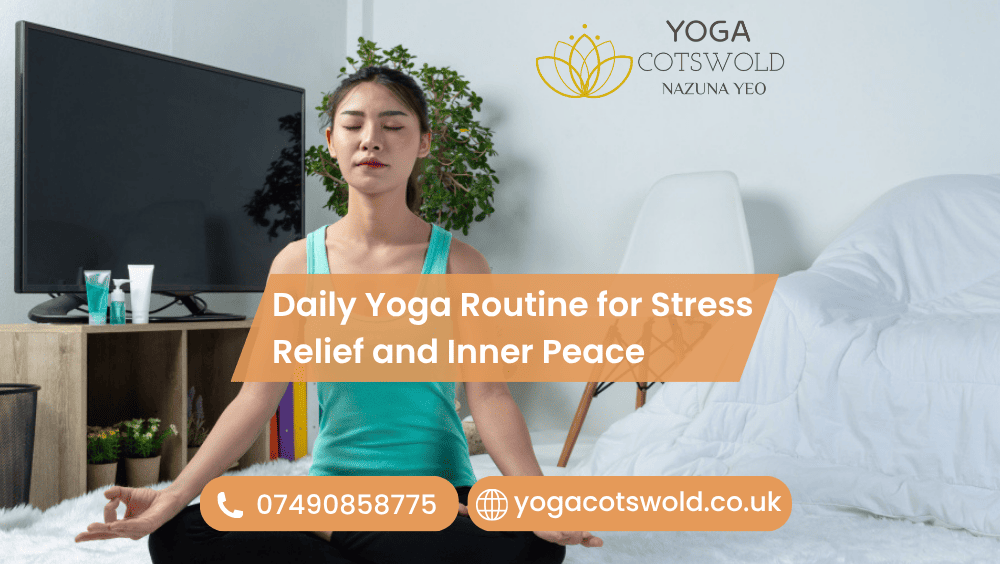
Some days start even before you’re prepared for them. Within minutes of waking, alarms bring only an initial flurry; our mind is running; by the time breakfast arrives we are already shouldering tension in our shoulders, our chest or somewhere behind the eyes. It happens quietly. Then by evening you’re exhausted but still not calm. That is where daily yoga for stress relief can really, practically help out.
Yoga is not merely about stretching or creating pretty shapes on your mat. At its roots, it’s a method of returning home to yourself.” It’s a short, daily rhythm that can help slow the breath and quiet the thoughts and create space in a day that otherwise feels full. You do not need an hour. Advanced poses are not required. All it takes is a few minutes, some patience and a willingness to hit pause.
At YOGA COTSWOLD, teacher Nazuna Yeo delivers yoga in a peaceful, friendly way—none of the forced stuff. The goal is not to perform. The goal is to start feeling, better and better, day by day.”
Why yoga helps when stress builds up
Stress is mostly never confined to the mind. It often moves into the body. You might experience it as a tight neck, a clenched jaw, shallow breath, headaches, bad sleep or that feeling of heaviness you can’t quite articulate. Gentle yoga routine for inner peace because it combines working on both the body and mind so that helps.
Your nervous system begins to settle when you move slow and when you breathe more intentionally. Your thoughts may still come and go, obviously, but they don’t seem quite so loud anymore. And that is one of yoga’s quiet gifts. It doesn’t remove life’s pressures, but it lets you approach them more firmly.
And daily yoga gives you a little pocket of peace in your day. That is more significant than people think. It’s amazing what 15 minutes can do to the tone of an entire day. Get details on Yoga Teacher in Leckhampton.
The best way to start a daily yoga habit
Start small. That is the honest answer. A lot of people quit before they even begin because they think that a perfect routine, or a perfect body, or mastery over themselves is required. They do not.
Better to do a short practice every day, than a long one you get in once a week. The morning does sound nice if you want to get your day started with a sense of groundedness. By evening is great as well, a few stressful days from lunchtime or before are fantastic. There is no rigid rule here. Pick a time frame that seems realistically available.
Keep your mat somewhere visible. Put on comfortable clothes. Remove your phone from your pocket and turn it OFF for a few hours often. Then begin without overthinking it. Looking for a Yoga Teacher in Pittville?
A simple daily yoga routine for stress relief and inner peace
The sequence below is gentle, beginner-friendly, and easy to follow at home.
1. Seated breathing – 2 minutes
You could put down a mat or cushion and sit cross-legged. Bringing your hands lightly to rest on your knees and lengthening up through the spine. If that feels comfortable, softly close your eyes.
Inhale slowly through the nose. Then exhale for a little longer than you inhaled. Do not force it. Just let the exhale soften.
It’s a start — and it sets an important precedent. Before proceeding, in-breath provides the body signals that it’s safe: It can relax.
2. Neck and shoulder release – 1 minute
Tilt one ear toward one shoulder, and then the other. Oscillate the shoulders forward and back.
Stress follows people into this place, so they don’t even know. It’s a small movement and it might feel like a too-simple move to make, but this helps more than you realize.
3. Cat-Cow stretch – 2 minutes
Come onto hands and knees. On an inhale, lift a little your chest and tailbone. Round through your back and tuck the chin as you exhale.
Follow the breath, not resist it. Let it feel slow and smooth. This releases tension from your spine and permits you to root back into your body.
4. Child’s Pose – 2 minutes
Sending your hips back toward your heels, stretch your arms long in front of you or leave them out to your side. Open your knees a little wider if you need extra space.
This pose feels like a pause button.” It can be the most comforting shape in all of practice on challenging-days.”
5. Downward Facing Dog – 1 minute
Tuck toes under; lift hips up and back. Maintain a soft bend in your knees if necessary. Let your head stay relaxed.
This pose opens the back body and promotes deeper breathing. If it feels too intense, come down and rest, then try again.
6. Standing Forward Fold – 1 minute
Root your feet to the floor and walk it to the front of the mat, coming into a fold over your legs. Bend the knees generously. Hold each elbow with the opposite hand and let the upper body hang.
Forward folds tend to settle the mind. There’s something so tranquillizing about turning inwards. Get details on Yoga Teacher in Prestbury.
7. Low lunge – 1 minute each side
Step one foot back and drop the knee to the ground. So lift your chest up and breathe through the front of the hip.
Long hours of sitting can make corridors inside the hips tight and heavy. This pose evokes a sense of space, and that space can feel emotional as well as physical.
8. Seated forward bend – 1 minute
Sit with legs out directly in front of you. Start by reaching forward gently, with the spine long; then softening into the fold.
So it does not really matter how far you go. Yoga is not a competition and each day the body opens differently.
9. Supine twist – 1 minute each side
Lie on your back, bend one knee into the chest and guide it across the body. If it feels good, stretch the opposite arm out and turn your head gently away.
Twists are especially nice at the end of a day. They help the body decompress and the mind quiet.
10. Legs up the wall – 3 minutes
Next, get close to a wall and raise your legs. Lower your arms to the sides and let your breath return to normal.
This pose for restorative yoga is one of the best poses for busy tired minds. I know it’s simple and soothing and, upon reflection, quite effective.
11. Savasana – 3 to 5 minutes
Lie all the way back and allow your entire body to relax. Allow the feet to fall open. Relax the jaw. It effectively softens the skin around the eyes.”
Do not rush this part. Many people assume that their hardest poses are the most meaningful. Frequent lines are what the real work is to be still. Looking for a Yoga Teacher in Stow-on-the-Wold?
How this routine supports inner peace
Inner peace is a terrific concept, but in practice it tends to be something smaller and more muted than that. It is when you realize your breath once more. It is that second when your shoulders relax involuntarily. It is that small sliver of space between one anxiety and the next.
A daily yoga practice offers more of those moments. Bit by bit, you might become less reactive, sleep more soundly and process tough days with a little more steadiness. Not perfectly. Just more gently. And that is enough.
At YOGA COTSWOLD, Nazuna Yeo teaches from that state of gentleness. Yoga is meant to augment your life, not add more pressure to it.
Related Articles:
» Evening Yoga to Unwind: A Gentle Routine for Better Sleep
» Morning Yoga for Beginners: 10-Minute Wake-Up Flow
» Yoga for Sciatica: What Helps and What to Avoid
» Yoga and Digestion: How Mindful Movement Supports Gut Health
» Yoga and Sleep: Can It Improve Your Sleep Cycle?
Embrace Peace Through Daily Practice
Meditation and yoga for stress relief and inner peace is also something that does not need to look impressive. It only needs to feel honest. Just a few simple postures, some deliberate breaths and a couple of minutes of stillness can do more than people think.
So begin where you are. On some days, the practice will seem as though it’s flowing naturally. Other days it might feel clunky, distracted, or a little flat. Do it anyway. The solace is in the returning, not in doing it perfectly.
Gradually, yoga becomes less about who you are on the mat and more about who you basically are when no one is looking. Calmer. Softer. Slightly more rooted in yourself. That’s the point, really.
FAQs: Daily Yoga Routine for Stress Relief and Inner Peace
1. How long should a daily yoga routine be?
Daily yoga can require 10 to 20 minutes a day. The main thing is, you do it every time.
2. Can yoga really help with stress?
Yes, yoga calms the body and mind by uniting movement, breathing and stillness.
3. Is this yoga routine suitable for beginners?
Yes, this one is a very basic routine with moves you can do at home.
4. What is the best time to practise yoga for stress relief?
Pray in the morning or pray at night, it does not matter. The best time to exercise is when you can do it consistently.
5. Do I need to be flexible to start yoga?
Not at all. Creativity is learned over time but does not have to be there in the beginning.
6. Which yoga poses are best for stress relief?
Some of the most grounding postures here include Child’s Pose, Forward Fold, Supine Twist, Legs Up the Wall and Savasana.
7. Can yoga help with anxiety?
Gentle yoga and breath work may lead to relaxation and help alleviate anxiety.
8. How often should I do yoga for inner peace?
Anything is better than nothing even if it is for a few minutes, and daily is best.
9. What should I wear for home yoga practice?
To sleep well you should wear the good loose simple clothes that will not restrict the breathing and movement from your body.
10. Can I do yoga at home without going to a studio?
Helpful, sure — plenty of people will assemble a lovely home practice. That being said, working with a teacher like Nazuna Yeo can offer you some direction and also reassurance.
11. Will yoga help me sleep better?
It does sometimes, particularly when doing it at night with slow movements and gentle poses.
12. How soon will I notice results from daily yoga?
While many people feel calmer just through one session, the deeper benefits manifest after a few weeks of regular practice.
Contact
info@yogacotswold.co.uk
Social Media
Get in Touch
07490858775




Address: GEORGE MOORE COMMUNITY CENTRE- BOURTON ON THE WATER
Moore Road, Bourton on the Water GL54 2AZ