How Regular Yoga Practice Improves Flexibility, Posture, and Overall Health
Regular yoga practice boosts flexibility, corrects posture, and supports overall health. Daily stretching strengthens muscles & reduces stress.
HEALTH TIPS
4/15/20266 min read
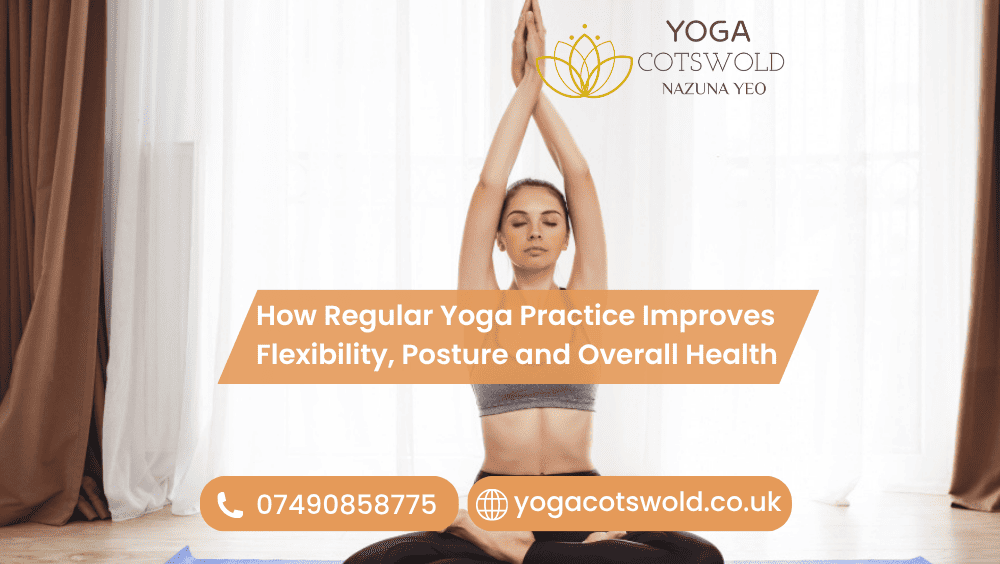
Yoga is more than a fitness trend at YOGA COTSWOLD. It’s a simple, no-nonsense method for helping the body move more easily, the mind to settle and daily life feel less chaotic. With guidance from NAZUNA YEO, regular practice can aid older people as well as those who’ve spent months hunched over a computer screen hoping to do something good for their bodies — the natural way, at least.
Many people experience tight hips and rounded shoulders, energy deficits and poor bodily awareness. But yoga is a gentle and soother solution. It is beneficial for lengthening tight muscles, strengthening weak areas and creating more balance in how the entire body works together when performed consistently. A better level of flexibility, improved posture and an advanced sense of general health- all come together as a result in the long run.
What Regular Yoga Practice Really Does for the Body
A lot of people come to yoga because they’d like to be more flexible. Yoga, of course, assists with that — but it does so much more. A balanced yoga practice should include stretching, strength, breathing and movement with mindfulness. Another reason the body doesn't simply get loose is that it becomes more stable and more efficient.
When a human does yoga regularly, the muscles around the spine, hips, shoulders and core begin to work more coherently. And this is important because pretty much all poor movement habits give rise to imbalance rather than just tightness. Hence, yoga is a means of re-training the body instead of acting as a temporary solution. Get details on Yoga Teacher in Cheltenham.
How Yoga Improves Flexibility
That doesn’t mean contorting the body into extreme positions. Framed this way, it’s less about expanding your potential range of motion and more about opening it up in ways that don’t go glamorously awry — establishing safer, slow-burn locomotive improvement. Routine yoga stretches muscles and soft tissues, particularly the hamstrings, hip flexors, chest area, calves and back — that tighten up from how we do life.
Forward folds, lunges, seated twists and gentle backbends invite the body to slowly let go of tension. And because yoga links the movement with breath, that allows the nervous system to begin to deescalate. And that’s important because the body can be tight even with a mind racing or stressed.
Yoga will improve flexibility, it is consistent practice that may get you to accomplish your day by day life actions with ease. It gets way easier to bend forward, get arms overhead and walk without so much stiff knees when sit down. Better flexibility can also relieve the stiffness so many report from hours spent in front of a desk.
How Yoga Supports Better Posture
Good posture is about more than standing up straight. It encompasses how the body is organized when sitting, walking, working and resting. The sad part is that poor posture usually occurs when some muscles become weak and others become overworked. For instance, sitting at a desk can constrict the chest and hips while the upper back and core become weaker.
And this is where regular yoga practice really comes into play. Yoga can help to strengthen the muscles that aid with spinal alignment, including but not limited to the core, back, glutes and shoulders. At the same time, it stretches out all the areas that tend to pull the body off balance.
Common complaints such as neck, shoulder and lower back discomfort lessen when one’s posture improves. They may also have better self-esteem and feel more comfortable in their body. Good posture can also help you breathe more easily this way — the chest and rib cage have room to expand in this state. Looking for a Corporate Yoga Trainer in Cheltenham?
The Link Between Yoga and Overall Health
Yoga Health Benefits for Body and Mind Regular yoga practice can also help with improving mobility of joints, muscle tone, circulation, balance and breathing efficiency. They enhance the mind's relaxation and concentration – improved ability to cope with stress.
And this systemic impact is one of the reasons yoga remains so appealing to many. It ensures the body is alive as an integrated system, rather than target-isolated. Because when movement, breath and attention converge, it can feel more integrated than a typical workout.
Some of the most recognised overall health benefits of yoga include:
Better body awareness
Reduced muscular tension
Improved balance and coordination
More comfortable breathing patterns
Greater mental clarity
Support for stress relief and relaxation
Better sleep quality in many people
While it is no substitute for medical care, yoga can be an excellent part of a healthy lifestyle when approached sensibly and regularly.
Why Consistency Matters More Than Intensity
One of the great myths about yoga is that you need long, advanced practices to make progress. In fact, it’s generally better to practice shortly and often than a compendious pep effort here and there. Just two or three sessions per week can suffice to produce important changes over time.
Because of this frequent practice, the body can slowly learn to adjust. Muscles stretch more safely, posture adjusts more naturally, and healthy patterns of movement are better able to endure.” That’s why newcomers should focus on establishing a habit they enjoy instead of being perfect.
At YOGA COTSWOLD this consistency and caring is part of experience. With NAZUNA YEO yoga is available, grounded and realistic for modern living. Get details on Group Yoga Classes & Training in Cheltenham.
Yoga for Modern Lifestyle Challenges
Today’s routines place heavy demands on the body. Sitting for work, commuting, stress, and reduced physical activity all affect how we move and feel. Yoga can help counter these patterns by bringing the body back into balance.
For example, regular yoga may help with:
Tight hips from prolonged sitting
Rounded shoulders from screen use
Back tension from poor posture
Shallow breathing linked to stress
General stiffness caused by inactivity
Because yoga can be modified according to individual needs, it’s considered good for beginners and also for people who have been inactive and want to return to moving.
Related Articles:
» Yoga for Knee Pain: Strength Without Strain
» 30-Day Yoga Tone-Up Challenge
» Yoga for Chronic Pain and Inflammation
» Yoga in Managing PCOS and Hormonal Imbalance
» Yoga and Sleep: Can It Improve Your Sleep Cycle?
A Gentle Path to Long-Term Wellbeing
Yoga’s greater potency becomes its degree of long-term investment. It’s not only about bending down to touch your toes, or striking the correct pose. Instead, it’s about cultivating a healthier relationship with your body, and discovering how to move — and keep healthy — in a more mindful, sustainable manner.
Years of regular yoga practice can, if you will, leave people feeling rather more open and vertical and alive. It may also build resilience — physically and psychologically.” That is why yoga never dates in the true world of wellbeing — that which lasts and isn’t a quick fix.
If you’re striving for better flexibility or improved posture or greater health, yoga offers a framework — balanced and achievable. And with the correct data and system applied at an aggregate level, these processes drive to change.
FAQs: How Regular Yoga Practice Improves Flexibility, Posture & Overall Health
1. How often should I practise yoga to improve flexibility?
For the average person, practicing yoga two to four times a week is enough to help improve flexibility over time (and in a safe manner)
2. Can yoga really improve posture?
Yes. Yoga strengthens and liberates the core, back and shoulders — key players in sustaining good posture when you sit.
3. Is yoga suitable for beginners with stiff muscles?
Absolutely. You first have to be flexible before you can do yoga. Actually, yoga stretch the body over time.
4. How long does it take to notice yoga benefits?
Within weeks, a large proportion see little changes in stiffness, posture and awareness of stress levels. Big changes tend to come from ongoing practice spread out over months.
5. Which type of yoga is best for flexibility and posture?
Gentle flow, hatha and alignment-oriented classes tend to be most effective for opening flexibility as well as posture.
6. Can yoga help reduce back and neck tension?
Yes. Yoga can help release tension for those who sit for hours at a time because it encourages better alignment, mobility and muscle balance.
7. Does yoga improve overall health or just fitness?
Yoga supports more than fitness. It also support movement, breathing, relaxation, balance and overall wellbeing.
8. Can yoga help with stress as well as physical tension?
Yes. Breathwork and mindful movement generally soothe the nervous system — which can relieve both stress as well as physical tightness.
9. Is daily yoga necessary for results?
No. Daily yoga rests in the category of aspirational, but you can receive meaningful benefits from just a few sessions a week as long as they don’t feel like “forcing yourself” and are regular.
10. Can older adults benefit from regular yoga practice?
Yes. Yoga can offer older adults the benefits of mobility, engaged range of motion, balance of movement in a variety of postures and ease when in posture — if it is modified appropriately for their age.
Contact
info@yogacotswold.co.uk
Social Media
Get in Touch
07490858775






Address: GEORGE MOORE COMMUNITY CENTRE- BOURTON ON THE WATER
Moore Road, Bourton on the Water GL54 2AZ